Workaholics are at risk of compulsive internet addiction

60% of people are at risk of compulsive internet usage, says research (pic: istockphoto.com/matka_Wariatka)

60% of people say they use the internet compulsively, says research (pic: istockphoto.com/matka_Wariatka)

It’s Monday morning. You log onto your emails at work and yet there are no surprises. Why? Because you’ve had your smartphone by your side all weekend and you’ve been checking your emails compulsively, unable to switch off. You see ‘relaxing’ as a pointless waste of time. Pushing yourself harder to achieve career success is what drives you. But it can also be what drains you.

If you recognise yourself here, then you could be among the 60% of workers who use the internet compulsively, often as a coping strategy. Increasingly it is high-fliers and overachievers whose internet usage can be excessive and compulsive, rather than students and the unemployed. That’s according to research among 516 people aged 18 to 65 by Dr Cristina Quinones-Garcia of Northampton Business School and Professor Nada Korac-Kakabadse of Henley Business School, which was presented at the British Psychological Society’s Division of Occupational Psychology’s Annual Conference in Brighton.

Using the internet was strongly linked to working obsessively, and overuse of the internet could lead to “measurable withdrawal symptoms” such as anxiety, isolation and depression. The researchers said that workaholics will often wake up several times in the night to check their emails, and their health and relationships suffer because they can’t manage to tear themselves away from their computer. They tend to be the high-achieving successful employees, but continued compulsive usage could lead to burnout.

This research is the latest in a growing body of evidence around the dangers of excessive internet use. A study by Missouri University of Science and Technology investigated the impact of heavy internet use on mental health and found that young people who used the internet excessively – including games, social media and email – showed signs of addictive behaviours, such as introversion, craving, loss of control and tolerance.

The Guardian offers five ways to curb your internet use and get your life back. However, if you’re worried that your internet use is getting out of control and having a negative impact on your life, email davanticounselling@gmail.com or call 07956 823501 to take the first step to speak to a therapist about it.

If you only do five things to combat job stress in 2014…

How can you avoid repeating the job stresses of last year? (pic: istockphoto.com/Pashalgnatov)

How can you avoid repeating the job stresses of last year? (pic: istockphoto.com/Pashalgnatov)

… do these ones.

OK. So, Christmas is over and you’re suddenly thrust back into the hotseat. All the things you promised yourself you’d change haven’t. Half a day back at your desk and you’re already in meltdown. Festive excesses are playing havoc with your waistline, your energy levels and your tolerance of the annoying people chomping crisps on the commuter train. And you find your colleagues far too focused on the crucial client meeting you really, really did mean to prepare for the day after Boxing Day.

In short, you feel back to where you started. But, there are five things you CAN do straight away to feel you’re back in control in 2014 and not under the pull of all those stresses from last year… (more…)

Lower your expectations if you want to avoid ‘Stressmas’

Not everyone feels warm and jolly at Christmas. (pic: istockphoto.com/javarman3)

People feel the pressure to prepare a perfect picture-postcard Christmas. (pic: istockphoto.com/javarman3)

Think of the ideal Christmas and you’ll likely conjure up images of families sitting cosily around a tree with cheeks of pink and presents of gold – everyone happy, jolly and getting on wonderfully. At least, that’s what the media would have us believe. With so many tips on how to stage-manage Christmas Day, there has arguably never been so much pressure on us to be perfect. And for many that image is impossible to make reality, because they may not have anyone to celebrate Christmas with – or because they just become far too stressed to enjoy it. For many, Christmas has become more like ‘Stressmas’.

The BBC reports that people suffering social anxiety have a far harder time at Christmas because of the pressure of having to spend time with people they may not know or like, the stress of finding the ideal present, and because they may obsess far too much about how they will come across to other people. It’s a time when we’re all meant to be happy, and that can be hard to fake when you’re the only person in the room not enjoying yourself.

Then there’s the stress of the person who’s tasked with keeping everyone happy: preparing, buying, cooking and entertaining even the most reticent or rowdy relatives. The Washington Post reflects on the increased stress that women feel during the festive season: they feel twice as much overwhelm as men. So much so that (more…)

Heavy texting affects sleep and creates stress, says study

Fear of missing a text can keep people awake during the night. (pic: istockphoto.com/idal)

Fear of missing a text can keep people awake during the night. (pic: istockphoto.com/idal)

Take a look round any train carriage, or indeed any social situation, and you’ll see how hard it is for people to put their mobile phones down. But this fear of missing out on a text, or even of misinterpreting what someone has texted, is ramping up stress levels and affecting people’s sleep.

Researchers from Washington and Lee University tested the effects of night-time testing on college students, the majority of whom would keep their phones beside their bed, or even under their pillows, so they could respond to texts during the night. They asked study participants to keep a sleep diary, and assessed results according to the Pittsburgh Sleep Quality Index, which measures the amount of sleep, the number of disturbances, and how long it takes to fall asleep.

The Telegraph reports the study findings: the more texts a person sends, the worse the quality of sleep. Young people also become more stressed around their friendships, as the meaning  of text messages can sometimes be misconstrued. The moral of the story is not to carry out any conflict or arguments via text, but to take it face-to-face instead. And not to take your mobile phone to bed.

Why stress makes the world stink

Stress and anxiety can make benign odours stink. (pic: istockphoto.com/kyolshin)

Stress and anxiety can make benign odours stink. (pic: istockphoto.com/kyolshin)

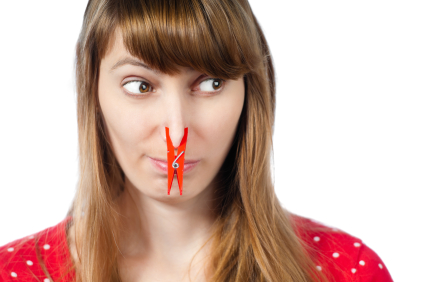
Smell is one of the most powerful sense for evoking memories and emotions. But researchers have discovered that stress and rewire the brain to make even benign odours stink.

Scientists from the University of Wisconsin-Madison used brain-imaging technologies to discover how smells influence emotional centres in the brain. People in the study were asked to look at disturbing words and pictures, and were then exposed to some neutral smells before having an MRI scan. As their stress and anxiety increased, their reaction to these neutral smells became more negative. The study showed the researchers that two independent circuits of the brain — one for processing smells, the other for emotion — “become intertwined under conditions of anxiety”.

Professor of psychology Wen Li, who led the study, says: “After anxiety induction, neutral smells become clearly negative. People experiencing an increase in anxiety show a decrease in the perceived pleasantness of odours. It becomes more negative as anxiety increases. We encounter anxiety and as a result we experience the world more negatively.”

Mental health is key determinant of happiness, says global report

World Happiness Report 2013Mental illness has more effect on misery levels across the globe than physical illness, income or unemployment. That’s according to the World Happiness Report 2013 from the UN’s General Assembly, which concludes that there is a relationship between the scale of mental illness and the levels of national happiness.

About 10% of the world’s population suffers from depression or anxiety, and these disorders account for a fifth of all disability – putting pressure on productivity and the economy. However, the report adds that governments are not prioritising mental health, or putting their money where their misery is, as only a third of people who need treatment are receiving it. And it calls on schools and workplaces to be more mental-health conscious.

It says: “Good, cost-effective treatments exist for depression, anxiety disorders and psychosis, and the happiness of the world would be greatly increased if they were more widely available.”

Interestingly, the report details factors from childhood that impact on life satisfaction as an adult. Number one is the child’s emotional development, followed by behaviour and intellectual development. The most important family influence is the mother’s emotional health.

The happiest country in the report is Denmark, followed by Norway, Switzerland, Holland and Sweden. The US comes in at 17th, and the UK is 22nd in the list. Factors the UN takes into consideration when assessing happiness are: “real GDP per capita, healthy life expectancy, having someone to count on, perceived freedom to make life choices, freedom from corruption, and generosity”.

The report concludes that subjective wellbeing has a huge influence on communities and the economy. “People who are emotionally happier, who have more satisfying lives, and who live in happier communities, are more likely both now and later to be healthy, productive, and socially connected. These benefits in turn flow more broadly to their families, workplaces, and communities, to the advantage of all.”

Anxiety + alcohol = emotional attachment to Facebook, says study

Anxious students who use alcohol are more likely to connect with others through Facebook. (pic: istockphoto.com/FotoFabbrica)

Anxious students who use alcohol are more likely to connect with others through Facebook. (pic: istockphoto.com/FotoFabbrica)

Students who feel lonely and anxious and who turn to alcohol are more likely to have an emotional attachment to Facebook. That’s the main finding of a study carried out at the University of Missouri.

The research among 229 students discovered that Facebook was a way to connect with others when feeling lonely or anxious – and those with higher levels of anxiety and alcohol use were more inclined to turn to Facebook to ease their anxieties.

“People who perceive themselves to be anxious are more likely to want to meet and connect with people online, as opposed to a more social, public setting,” says study author Russell Clayton. “Also, when people who are emotionally connected to Facebook view pictures and statuses of their Facebook friends using alcohol, they are more motivated to engage in similar online behaviors in order to fit in socially.”

Students who use marijuana were reported not to have emotional connectedness with Facebook.

Feeling unloved as a child can lead to anxiety as an adult

Lack of love as a child can lead to anxiety as an adult. (pic: istockphoto.com/nsilcock)

Lack of love as a child can lead to anxiety as an adult. (pic: istockphoto.com/nsilcock)

Adults who perceive a lack of parental love as a child could be more likely to suffer anxiety-related issues.

That was the main finding from a study by the Surrey Institute of Clinical Hypnotherapy (SICH), which looked at 100 clients with social phobia or agoraphobic-type anxiety over a three-year period. There were 81 out of the 100 who believed their parents never loved them, or removed their love (through divorce, death or working away) before the child was 13.

When parental love was removed the child had feelings of low self-worth, and felt ‘not good enough’ when they grew up. This can lead to anxieties such as fear of driving on motorways, or fear of crowded places. Where parental love never existed (through not showing affection, for example, or where one of the parents was never around) the child lacked confidence, particularly in social situations. This can carry on to adulthood and manifest as fear of public speaking or fear of being the centre of attention.

The sample of clients analysed by SICH is obviously self-selecting, as they all chose to come for hypnotherapy to alleviate their anxiety. But the survey does give some idea of how lack of love can affect the development of a child. SICH says parents should listen to their children, show affection, play with them every day, and stick to boundaries.

Red Nose Day helps to break the taboos around mental health

anima red nose dayDepression is often suffered in silence: you soldier on, not able to feel any enjoyment in life, and the weight can be crushing. But celebrities suffer from depression too, as X Factor winner James Arthur has shown in his public support for Red Nose Day.

James has spoken about the depression and anxiety he has suffered in the past – and how making and singing music has helped alleviate his pain. He was visiting the STAMP Revisited mental-health project in the North East, which is one of the programmes supported by Comic Relief funds, and hopes that he’ll be able to break some of the taboos around depression. James is quoted as saying: “In my life I’ve had some low points, so now it’s really important to give something back because I’m really passionate about changing people’s perceptions about mental health.”

When someone in the public eye speaks out, perhaps it will encourage others to reach out for help too.

Hiding from your fears won’t make them go away

Avoiding your fears won't make them go away. (pic: istockphoto.com/Omelchenko)

Avoiding fear as a child can lead to anxiety. (pic: istockphoto.com/Omelchenko)

Picture a little child playing, and she’ll cover her eyes when there’s something scary and doesn’t want to see, and she’ll make everything magically go away. But unfortunately when she opens her eyes again the scary thing is still there. And avoiding scary situations is more likely to make children anxious, according to research from the Mayo Clinic.

It studied 800 kids aged seven to 18 to measure their avoidance habits. It asked their parents whether the child asked to do something later if she was worried about it. And researchers also asked the children to describe what they do when they’re scared – for example: “When I’m scared of something I don’t go near it.” They also measured the kids’ levels of anxiety.

The study found that levels of avoidance could predict future development of anxiety, as the children who described avoidance behaviours at the start of the research tended to be more anxious a year later. Dr Stephen Whiteside from the Mayo Clinic says this is a way of gauging how children can develop anxiety disorders when they’re older.

He recommends cognitive-behavioural therapy (CBT) as a way of gradually exposing children to what they’re afraid of. Avoidance scores dropped by half among children who had CBT. “Kids who avoid fearful situations don’t have the opportunity to face their fears and don’t learn that their fears are manageable,” adds Dr Whiteside.