Spirituality affects feeling and religion regulates behaviour, says academic study

Spirituality regulates our emotions, while religion affects our habits.

Spirituality regulates our emotions, while religion affects our habits.

You might think religion and spirituality often go hand in hand – and perhaps they do in some ways for some people – but they can have different effects on how we feel and act, according to research from Oregon State University.

The study says that spirituality, which may include practices such as meditation and ‘self transcendence’ – where we feel our lives part of something bigger than our physical selves – can regulate our emotions. Fair enough. Anyone with a spiritual practice is likely to feel more connected with him/herself and with the universe. But that connection doesn’t end with increased wellbeing, says the study. Spirituality can also have an impact on “the inflammatory processes underlying chronic illnesses such as cardiovascular disease and cancer”. The researchers added: “Measures of spirituality were more strongly linked to biomarkers, including blood pressure, cardiac reactivity, immune factors, and disease progression.”

Religion – defined as an affiliation or service attendance – was “strongly associated with better health behaviour habits, including lower smoking and alcohol consumption, and greater likelihood of medical screenings”.

The results aren’t conclusive, and are open to further research, but from this study it seems that the impact of religion and/or spirituality in our lives could have a positive effect.

Related article:

Can spirituality make you more resilient to depression?

A sense of ‘belonging’ can help beat depression

Feeling affinity with a group can help alleviate depression. (pic courtesy of Stuart Miles/FreeDigitalPhotos.net)

Feeling affinity with a group can help alleviate depression. (pic courtesy of Stuart Miles/FreeDigitalPhotos.net)

If you’re depressed, you can feel lost and alone, as if everyone were against you. It can be a terribly isolating place, and it’s easy to withdraw from interacting with the world. Yet making the effort to connect with a group can be one of the first steps to recovery from depression.

A study from the Canadian Institute for Advanced Research (CIFAR) discovered that finding a connection with social groups can help alleviate depression and anxiety and prevent relapse.

People who took part in the research joined either a community group with activities such as yoga, sports and art, or took part in group therapy. What made the difference in both groups was the sense of connection participants felt with the other group members. Those who did not identify with the rest of the group had a 50% chance of feeling depressed a month later. However, among those who felt a stronger connection with the group, less than a third were clinically depressed a month later.

The difference is a feeling of being supported by the rest of the group, of everyone being ‘in it together’. In other words, depressed people began to feel a sense of ‘us’ rather than ‘them’. The study concluded that “joining groups, and coming to identify with them, can alleviate depression”. 

What is significant about this research, however, is that the ‘group’ aspect of social interaction is crucial, rather than just the interpersonal relationships within groups. Finding groups with whom you have an affinity could be the first step to feeling lighter and happier.

Why bereavement can feel like getting lost in space

Like this astronaut, losing gravity is a powerful metaphor for grief. (pic courtesy of porbital/FreeDigitalPhotos.net)

Losing gravity is a powerful metaphor for grief. (pic courtesy of porbital/FreeDigitalPhotos.net)

Anyone who has seen the movie Gravity will know that it wows on two fronts: one, for its special effects, which have won it countless film awards; and two, for the grief metaphor that runs like a slow teardrop down a window pane until it sploshes, with relief, into the credits at the end.

One of the on-screen phrases at the start of Gravity is: ‘Life in space is impossible.’ It can feel beyond a bereaved mind to contemplate how you will never see the person again, and how life will never, ever have the same richness or colour as when the person lost was alive. LIfe, as we’ve known it, will literally never be the same again. Living can feel impossible.

Anyone who has lost anybody close to them will know how tempting it is to (more…)

Stress makes men more self-centred and women more empathic

Men's stress makes them   unable to relate to what's going on around them (pic courtesy of FreeDigitalPhotos.net/MasterIsolatedImages)

Men’s stress makes them unable to relate to what’s going on around them (pic courtesy of FreeDigitalPhotos.net/MasterIsolatedImages)

Stress makes men shut down, think only of themselves, and makes them unable to empathise with those around them. Women, on the other hand, become worried about other people. More evidence, perhaps, that could explain the difference in gender responses – and how the breakdown in communication and empathy explains why some relationships just don’t work. Or, at least, that’s according to new research from SISSA.

Men become unable to distinguish their own emotions and feelings from those of other people when subjected to stress, says the study. Women become more ‘prosocial’ while men think that everyone else must be feeling the same way they do.

“There is a subtle boundary between the ability to identify with others and take on their perspective and therefore be empathic, and the inability to distinguish between self and other, thus acting egocentrically,” say the researchers. “To be truly empathic and behave pro-socially, it’s important to maintain the ability to distinguish between self and other, and stress appears to play an important role in this.”

Women apply more ‘social strategies’ when stressed – meaning they reach out and ask for help – while men expect everyone else to feel the same way they do.

To work out how to communicate more effectively with your partner, under stress – whether a man looking to become more empathic, or a woman looking at ways to cope with stress – call 07956 823501 or email davanticounselling@gmail.com

Counselling could give ‘loveless’ households a chance

One in four children grow up in loveless households. (pic courtesy of FreeDigitalPhotos.net/smarnad)

One in four children grow up in loveless households. (pic courtesy of FreeDigitalPhotos.net/smarnad)

With a quarter of children growing up in ‘loveless’ households – where parental relationships have broken down – the government is calling for more people to seek counselling to work through their emotional issues.

Figures from the Department for Work and Pensions (DWP) show that 24% of households where both biological parents live together are unhappy in their relationship. Growing up in unstable homes can put kids at a social disadvantage in later life, says the DWP, and at higher risk of issues with mental health, substance abuse and lower educational attainment.

“We know that family breakdown – or a damaged parental relationship – can have a devastating impact on children’s prospects as they grow up,” says Iain Duncan Smith, Secretary of State for Work and Pensions. “Whereas when families are strong and stable, the children tend to have better life chances.”

Conservative MP Andrew Selous, who chairs a parliamentary group for sustainable relationships, adds that people should not feel ashamed to seek counselling support. “We need to remove the stigma around counselling. We have a natural British reserve which assumes there must be some kind of problem if you need counselling. We need people to understand it is essential to their emotional health.”

Related stories:

Why reading a good book can be therapeutic (and not just on World Book Day)

A year on from writing this post, I still feel the magic and beauty of books, and the emotional support they can offer us in so many ways. So, World Book Day is always a day to celebrate.

DavantiCounsellor's avatardavanti counselling

worldbookdayya Today is World Book Day : a global reason to celebrate all that’s good about books and reading. The point of World Book Day is to get kids “exploring the pleasure of books”, but for adults it’s also an excuse to indulge in the curiosity and escapism a good book can provide. (As if you need an excuse!)

But reading isn’t just about entertainment or killing time on a commute. Studies have shown that bibliotherapy (a form of psychotherapy using reading materials) can help to reduce people’s negative thoughts and mild depressive symptoms.

Here are 10 ways reading can have a therapeutic effect:

  1. Reading helps you make sense of your world and your place in it. There’s a book somewhere that will have a story or situation that is similar to yours, and that you can identify with.
  2. Metaphors can make issues easier to come to terms with – especially…

View original post 225 more words

Can you ‘do an Oprah’ and let go of claustrophobic clutter?

davanti clutter“Knowing what you need is more than knowing what you want,” says Oprah Winfrey in an article about clearing her clutter. Big words, big aim – but not making anyone immune to the anxiety that goes with clearing out the clutter of our lives that can keep us stuck.

Even Oprah admits to feeling some anxiety – and wanting to buy back some of her stuff – when dealing with the emotional impact of saying goodbye to some of her most prized possessions. Ultimately, her instincts were that “instead of feeling walled in by stuff, [she] want[ed] to feel surrounded by calm”.

Having a vision for a cleared space is admirable. Many of us want to feel less ‘walled in’ by our clutter, but there can be so much invested in the objects we hold dear – especially if those objects belonged to someone who is no longer in our lives.

Oprah’s point is that our stuff doesn’t have to own us, but it can be so hard to let go. Who’s to say when it’s time to let go of a particular object?

Experience of letting go shows that you more you’re able to release to the world, the more the world is able to release to you. Hold onto the objects that you’ve paid a fortune for, but you have no further need of, and work out what you will get in return. Release objects to people who really need them, instead of hoarding them yourself, surely has to be the opportunity we’ve been given: to bestow on others the gifts that we have been given ourselves.

In Oprah’s words – assuming we’re not wanting for our basic needs – then “less actually is so much more”.

More emotional support needed for the 6 in 10 mothers suffering postnatal depression

59% of new mothers suffer the baby blues, but 75% don't seek support from their midwife (image courtesy of m_bartosch/freedigitalimages.net)

59% of new mothers suffer the baby blues, but 75% don’t seek support from their midwife (image courtesy of m_bartosch/freedigitalimages.net)

Midwives believe that the main focus of postnatal care should supporting the new mum emotionally, and yet 75% of mothers do not turn to their midwives for help with the baby blues.

A Royal College of Midwives (RCM) survey has found that 75% of midwives think ‘organisational pressures’ determine the number of postnatal visits, while 60% think that mums need emotional support as a priority.

The percentage of women feeling down or depressed after giving birth  is 59%, says the survey, and midwives find themselves having to “paper over the cracks in an underfunded adn under-resourced postnatal environment”, which is having a “detrimental effect on the health of women and children”.

A quarter of the women who completed the RCM survey, carried out in conjunction with parenting website Netmums, say the maternity team had not asked them if they were coping during postnatal visits. Yet 24% of student midwives say they are adequately trained to deal with postnatal mental health issues, and 29% say they don’t feel confident enough to recognise mental illness or emotional illness in women who have recently given birth. The report recommends a review of midwifery training to ensure that they are equipped with the knowledge and skills to deal with these issues.

Sally Russell, co-founder of parenting website Netmums, says: “There is an urgent need for more support for new mums’ mental health. With over half the new mums in the UK suffering baby blues, we are in danger of letting vulnerable mothers slip through the net and suffer serious mental illness. Many women who are struggling often blame themselves for ‘not coping’, and so don’t necessarily know their midwife can help. As the RCM report shows, it’s vital we train more midwives to help vulnerable women at this crucial time. Every mum deserves to be treated with compassion and have the chance to talk about their mental health as well as their physical health.”

Postnatal depression can be an isolating and frightening experience for new mothers. If you feel you would like counselling support at this vulnerable time in your life, call 07956 823501 or email davanticounselling@gmail.com for a confidential appointment.

Writing therapy boosts ‘courageous coping’ in cancer patients

Expressing the unexpressed in writing can be a healing and resilient experience for people battling cancer. (pic courtesy of Sura Nualpradid/freedigitalphotos.net)

Expressing the unexpressed in writing can be a healing and resilient experience for people battling cancer. (pic courtesy of Sura Nualpradid/ freedigitalphotos.net)

The act of expressing thoughts and feelings in words and song lyrics can help cancer patients find more resilience and coping strategies to help them live with the disease. Two recent therapeutic writing projects shows just how effective writing your pain down on paper can be.

The first project, a ‘Therapeutic Music Video’ (TMV) was run by the Indiana Nursing School in Indianapolis for adolescents and young adults undergoing stem cell transplant treatments for cancer. The aim of the TMV project was to encourage the patients to explore their thoughts and emotions about their disease and treatment through the creative process of writing song lyrics and producing a music video. Oncology Nurse Advisor reports that the project helped patients express what had remained unspoken, allowed them to reflect on their experience of illness and treatment, and helped them identify what was important to them (friends, family, spirituality, healthcare professionals).

The 113 patients took part in 113 sessions over six weeks, where they made music videos and share them with loved ones, so they could also gain a new perspective on the cancer patients’ experiences.

The study found that that the TMV group reported “significantly better courageous coping”, especially through feeling better connected and supported by family and medical staff – helping to boost their feelings of resilience in the face of their disease.

A second study, published in the Journal of Clinical Oncology, found that expressive writing could boost quality of life for renal cancer patients. The report authors concluded: “Expressive writing may reduce cancer-related symptoms and improve physical functioning in patients with renal cell carcinoma. Evidence suggests that this effect may occur through short-term improvements in cognitive processing.”

In other words, the chance to give outer expression to inner conflicts, struggles and challenges can, to some extent, be healing.


Could your stress levels today be picked up from mother when you were a baby?

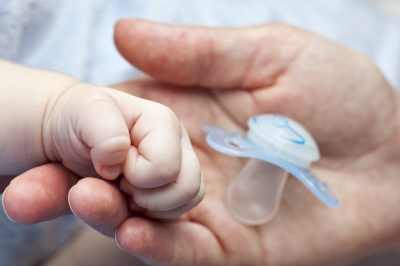
Infants absorb stress and anxiety from their mothers, says research. (pic courtesy of Serge Betasius Photography/freedigitalimages.net)

Infants absorb stress and anxiety from their mothers, says research. (pic courtesy of Serge Betasius Photography/freedigitalimages.net)

Now and again, a new piece of research comes along that explains so much that my counselling clients are experiencing today. Such pieces of research pretty much sum up the reason why psychotherapy exists: to help heal the wounds of our past and come to terms with what was painful on our childhoods.

The issue with the past, however, is that so much of that early wounding happens in a pre-verbal phase. It’s when we are tiny babies when we don’t have words to express what’s going on that some of those hurts can happen. People may think that babies won’t know the difference. But, as adults having a crisis in later life, feeling unable to cope, we can often feel left with an unease that something isn’t right. We just can’t put it into words. It’s just a feeling that keeps playing out in unhelpful behaviours, situations and cycles that they feel stuck in. And some of those behaviours and feelings may be in response to the nurturing – or otherwise – we experienced as infants.

So, what’s this piece of research that I feel resonates with the wounds in my clients? (more…)