Why not let World Book Day inspire you to write…?

World Book Day 2015World Book Day is that time of year when children are encourage to talk in rhyme, read their favourite books, visit libraries, engage with their favourite authors, and dress up as a book hero or villain.

But why let World Book Day be all about the kids? Awareness Days mark something to be celebrated, and sometimes one can capture our souls more than others. World Book Day, for me, is about optimism and adventure and creativity and imagination. It’s about remembering something wonderful about our past, and possibly creating something for our future. World Book Day always encourages me to write. Something. In honour of all the words and pages and books that have gone before me, that have inspired me, and have held me when nothing else could.

I work with people who would love to have the freedom to write and yet feel blocked, stuck, stupid, unworthy. All core beliefs that leave them in non-writing. World Book Day can be just the excuse you need to get your pen out and scribble on a scrap piece of paper, or your poshest notebook. Whatever needs to emerge will emerge. Just as I rocked up to write a blog post about writing and World Book Day without a plan or an outcome. Just in honour of a feeling.

Related post: Why reading a good book can be therapeutic (and not just on World Book Day)

Social snubs are harder to shake off if you’re depressed

Not fitting in and being rejected by the crowd hurts more if you're depressed. (pic courtesy of freedigitalphotos.net/StuartMiles)

Not fitting in and being rejected by the crowd hurts more if you’re depressed. (pic courtesy of freedigitalphotos.net/StuartMiles)

The hurt of being snubbed by someone who used to be your friend, or being rejected by social groups goes deeper and lasts longer if you’re suffering from untreated depression, according to a study from the University of Michigan. This seems to be adding insult to injury to people who may already be feeling bad about themselves. However, there is a scientific reason to explain this.

The researchers tested stress-reducing chemicals (called opioids) in the brains of depressed and non-depressed people in the context of online dating, where likes and rejections often come in equal measures. In short, when depressed people received rejections they found it harder to regulate their emotions, while non-depressed people were able to cope with the social stress and move on without giving it much more thought.  When someone liked them back, both depressed and non-depressed people felt an uplift (which the researchers were surprised about, because depression can affect the ability to feel joy). However, the feeling of social acceptance was short-lived in people with depression.

Announcing a new Purley CR8 counselling practice

davanti purley practiceDavanti Counselling is delighted to announce the opening of a new practice in Purley CR8, offering a discreet venue for confidential counselling within easy reach of Caterham, Coulsdon, Croydon and Kenley.

Finding the right counselling space can help you feel comfortable to express things you’ve never dared say before. Most importantly, in the right environment, you’ll feel heard, understood and accepted. The therapeutic relationship can offer consistency and containment, and can help you work through your current issues to identify a future of new possibilities.

An ambience of peace, healing and optimism is what I’ve aimed to create within my new practice in Purley.

Appointments are available daytimes and evenings. Call Karen on 07956 823501 or email to book an initial session.

Stress can make you react like a small child

Stress can steal your ability to think critically, making you react like a child. (pic courtesy of stockimages/FreeDigitalPhotos.net)

Stress can steal your ability to think critically, making you react like a child. (pic courtesy of stockimages/FreeDigitalPhotos.net)

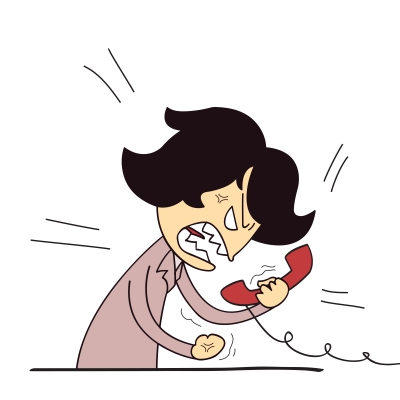
Think being stressed can help you focus and perform better? Think again. Being stressed can affect your ability to think, and you can end up making “snap” reactions from a place of emotion rather than logic – which is what small children do when faced with a problem they don’t understand.

That’s according to research from Benenden Health into the impact of short-term stress on our ability to think critically, use reasoning, and make practical decisions. Two groups of 100 people were given tasks to complete in these areas, with one group given stress-inducing activities before completing the tasks. The non-stressed group consistently outperformed the stressed group, especially in the spatial abstract reasoning tests (our ability to identify and work with patterns and sequences). The more difficult the decision, the harder it was for stressed people to make it.

The only area where stressed-out people performed better was in emotional recognition: they were more able to recognise sadness in someone’s face than the non-stressed group. Perhaps suggesting that stressed people are more likely to identify other people’s unhappiness because they’re unhappy themselves.

The study also found that eight out of 10 people (79%) attempted to deal with stress on their own – whereas “social support and talking through stressful situations can be the best coping mechanism”.

If you find you’re not coping well with stress and would appreciate the opportunity to talk through your own stressful situations with a counsellor, call Karen on 07956 823501 for an appointment. Counselling can also help you recognise triggers for your stress and identify ways not to react from an emotional child place, and instead wait to respond from a calmer, more logical, more adult place.

Feeling down? Sit upright to avoid a slump in mood

If body posture affects your mood, then slumping can make you feel down. (pic courtesy of Master isolated images/Freedigitalphotos.net)

If body posture affects your mood, then slumping can make you feel down. (pic courtesy of Master isolated images/Freedigitalphotos.net)

If you’re feeling low, chances are your body posture will mirror your mood. You may slump or slouch, as your body slackens and gives up the fight. Yet, new research has found that this also works the other way round: our body posture can have an effect on our emotions. If you slump, you’re more likely to keep hold of negative thoughts.

In tests, the researchers asked 30 depressed people to sit either in a slumped (depressed) or upright (non-depressed) posture while imagining themselves in a scene in front of them, where positive and negative words flashed on a computer screen. They found that upright patients were able to recall a balance of positive and negative words, whereas the slumped patients showed “recall biased towards more negative words”.

They concluded that posture has more of an impact on mood than previously believed. The body can influence the mind and how we feel about ourselves.

The researchers said: “Training patients in mindful body awareness might be useful because it fosters an intuitive understanding of the interplay of bodily and emotional processes.” In other words, becoming more conscious of the mind-body connection might mean you could catch yourself before you fall into a slump. Becoming aware of your posture could therefore be a quick boost to your mood.

Why change has to happen one moment at a time

Don't rush for an xyz when your rate of change is still at abc (pietc courtesy of freedigitalphotos.net/sheelamohan)

Don’t rush for an xyz when your rate of change is still at abc (pic courtesy of freedigitalphotos.net/sheelamohan)

People who come to long-term therapy want to change. They’re becoming more aware of what isn’t working for them in their lives. They want to introduce new ways of behaving and being in the world. Most importantly, they want to stop feeling the horrible stuff they’re feeling now.

They want a quick fix, a magic wand or potion, that will transport them from the stuckness of now to the freedom of the life they want.

Except that change doesn’t happen overnight. Hard to digest, maybe. But change isn’t ingested in a red or blue pill. Change isn’t about waking up one morning and deciding to be different. Change happens in those tiny moments of life when we decide to respond in a new way. How? (more…)

What entrepreneurs can teach us about happiness

Finding your own compass can be key to happiness in life (pic courtesy of freedigitalphotos.net/David Castillo Dominici)

Finding your own compass can be key to happiness in life (pic courtesy of freedigitalphotos.net/David Castillo Dominici)

Is happiness about following your own way in life? A thought-provoking article by Luke Johnson in the FT suggests it is. If so, then people seeking their purpose and potential in life could learn a lot from entrepreneurs.

People who choose to run their own businesses aren’t just doing it for the money – though that can be a benefit. They’re doing it to make their own choices in life, and to be in charge of their own destiny.

Even though the first years of being an entrepreneur can be tough – financially and personally – running their own show is preferable to being given orders by someone else. They know the link between reward and success, and they work hard to achieve what they really want. They get where they are through their own efforts, rather than jumping through hoops to impress a boss they don’t like to gain a promotion they may not particularly want. Even when they achieve higher status at work, this can bring additional pressures to impress a new boss, who may end up stealing their ideas and leaving the person feeling lost, frustrated and wondering what life is really all about.

If that’s how we’re feeling in life, then perhaps entrepreneurs have a lot to teach us. (more…)

Stress: is kindness more effective than confidence?

Press forgiveness rather than punishing yourself. (pic courtesy of freedigitalphotos.net/stuartmiles)

Press forgiveness rather than punishing yourself. (pic courtesy of freedigitalphotos.net/stuartmiles)

Ever found yourself finding reasons to beat yourself up, believing yourself to be at fault, and wishing you could be a better person? If that’s a familiar (or daily) situation, then research is increasingly seeking to prove that being kind to yourself is far more effective than finding mantras for your self-esteem.

Being kinder to yourself, and finding more compassion for your faults and those of others, could help you deal more effectively with the daily stressors of life. That’s the main finding of research from Brandeis University on self-compassion.

The long-standing view has been that self-esteem is the cure-all, but the new view is that self-compassion could be far more effective in helping us cope with the stresses that bear down on us all.

Self-compassion is the ability to forgive yourself for stuff you’ve done, not blaming yourself or taking more responsibility than you should, and letting it go rather than dwelling on it. In other words, it’s the ability to cut yourself some slack.

The researchers asked people to rank their agreement to statements such as, “I try to be understanding and patient toward aspects of my personality I do not like” and “I’m disapproving and judgmental about my own flaws and inadequacies”. Resulting stress tests were recorded.

Tests showed that people with low self-compassion carried their stress from the day before into today, which made them more vulnerable to the effects of stress.

The researchers said: “It is easy for stress to build over time, and a seemingly small daily stressor, such as traffic, can impact a person’s health if they don’t have the right strategies to deal with it.”

My take on this? Forgive yourself for stuff outside your control – where possible. Beating yourself up in areas that have nothing to do with you, or have a detrimental effect, are to be avoided. This way of being can have its roots in childhood, and how you had to take care of a parent as a child.

For support and to work on forgiveness, call 07956 823501 or email davanticounselling.com

Have you caught ’empathic stress’?

Scientists say stress is contagious. (pic courtesy of freedigitalphotos.net/ddpavumba)

Scientists say stress is contagious. (pic courtesy of freedigitalphotos.net/ddpavumba)

Has your boss ever started huffing and puffing, even when everything is going to plan and to deadline, and you can’t help but start to feel the pressure too? Or how about you’re watching a tense moment on TV and you feel yourself far more stressed than you should?

Scientists say stress could be as catching as the common cold. Just being around stressed individuals, or watching them stress out, raises levels of the stress hormone cortisol even if you’re an observer. This was the main finding of a study by the Max Planck Institute for Cognitive and Brain Sciences in Leipzig and the Technische Universität Dresden. The researchers found that observing stressful situations has a physical response – and say that this form of ’empathic stress’ should not be ignored because it can lead to serious issues of burnout, depression and anxiety.

Empathic stress was worse when the observer stressed individual were in a relationship. But even watching stressful programmes on TV can raise cortisol levels. “Stress has enormous contagion potential,” say the researchers.

They added that people working as caregivers could be particularly susceptible to the harmful consequences of empathic stress. “Anyone who is confronted with the suffering and stress of another person, particularly when sustained, has a higher risk of being affected by it themselves,” they add.

Interestingly, while other studies have shown women to be more empathic than men, this piece of research showed that “men and women actually experience empathic stress reactions with equal frequency”.

Confiding in a trusted colleague can alleviate work stress

Don't take it out on customers. Chat to a colleague if you're overwhelmed. (pic courtesy of freedigitalphotos.net/jesadaphorn)

Don’t take it out on customers. Chat to a colleague if you’re overwhelmed. (pic courtesy of freedigitalphotos.net/jesadaphorn)

With a third of UK workers struggling to cope with depression, stress and burnout, perhaps the chat around the water cooler could be refreshing in more ways than one? The key thing is to pick the person who’s going to empathise and – most importantly – be able to keep your issues confidential. Being able to speak to someone you trust could make your issues seem more survivable.

A survey from the Depression Alliance, as part of Depression Awareness Week, says that eight in 10 workers suffering stress-related issues feel lonely and isolated because of their feelings. Only half of those feeling lonely or isolated had confided in a colleague, yet nearly 71% found that discussing their condition with a colleague helped them feel better.

I think the key point here is trusted. Workplaces can abound with politics. It’s great to offload on a colleague feeling similarly overwhelmed, but think about who this colleague would share it with. If you can’t trust someone at work, then your partner or friend might be able to help.

But if you really need to offload to someone who’s outside your professional and social circles, and who won’t spread the whispers around that water cooler, then call 07956 823501 or email davanticounselling@gmail.com