Why reading a good book can be therapeutic (and not just on World Book Day)

worldbookdayyaToday is World Book Day: a global reason to celebrate all that’s good about books and reading. The point of World Book Day is to get kids “exploring the pleasure of books”, but for adults it’s also an excuse to indulge in the curiosity and escapism a good book can provide. (As if you need an excuse!)

But reading isn’t just about entertainment or killing time on a commute. Studies have shown that bibliotherapy (a form of psychotherapy using reading materials) can help to reduce people’s negative thoughts and mild depressive symptoms.

Here are 10 ways reading can have a therapeutic effect:

  1. Reading helps you make sense of your world and your place in it. There’s a book somewhere that will have a story or situation that is similar to yours, and that you can identify with.
  2. Metaphors can make issues easier to come to terms with – especially if the problems are hard to talk about.
  3. Losing yourself in a good book is a great stress-reliever. It’s about creating some me-time, switching off from life’s stressors, and escaping to another world.
  4. Books stimulate the imagination and creativity. They may even tempt you to write your own feelings in a journal to help you process and understand what’s going on for you.
  5. You can rekindle your passion for stories and feel more alive and connected.
  6. You can feel uplifted and know you’re not alone by reading other people’s situations and understanding how they process and express their emotions.
  7. A word, a phrase, a gesture in a book may hold the essence of something deeply felt within that’s never been expressed before.
  8. Stories can hold deeper meanings for your life and touch you in a way that real-life situations can’t.
  9. Libraries are a ‘healing place for the soul’, according to the Ancient Greeks. The very act of reading can be healing – especially when you create the time and space.
  10. It can be exciting to go into a bookshop or library without knowing what you’re looking for, and trusting that the right book will leap out at you with the right message at the right time.

So, trust the process and go and grab a good book. You’ll feel all the better for it.

Gaming improves wellbeing in older generation, says academic study

Psychologists say older people who play video games are happier than those who don’t. (pic: istockphoto.com/Feverpitched)

You might traditionally expect people around retirement age to favour pursuits like crosswords, bridge, bowls or knitting. But scientists have shown that people aged 60-plus are active in more unusual ways. They’ve found that the senior generation who play video games are happier than those who don’t.

Psychologists from North Carolina State University in the US researched ‘Successful aging through video games‘ with 140 people aged 63 and over. They wanted to discover the differences in emotional wellbeing and depression between older adults who play video games and older adults who don’t game at all.

They found that older people who played video games regularly or occasionally had higher levels of wellbeing and fewer incidence of depression compared with older people who aren’t gamers. “Findings suggest that playing may serve as a positive activity associated with successful aging,” concluded the researchers.

One in 10 new mothers experiences obsessive-compulsive symptoms

Most new mums' anxiety about their baby alleviates within six months (pic: istockphoto.com/c12)

Most new mums’ anxiety about their baby alleviates within six months (pic: istockphoto.com/c12)

Psychoanalyst Donald Winnicott says the only way to be a good mother is to be a “good-enough mother”. But “good enough” can feel a long way off for new mums struggling with feeding, nappies, sleeping, exhaustion and worries about her newborn baby.

For most new parents, it’s natural to feel some anxiety when their baby arrives. Winnicott adds that new mothers become totally absorbed with their baby “to the exclusion of other interests, in a way that is normal and temporary”.* But that maternal preoccupation can become all-consuming and develop into obsessive-compulsive symptoms for 11% of new mothers between two months and six months after giving birth. This was the core finding in a study by Northwestern University Feinberg School of Medicine, which says that OCD symptoms in the general population, by comparison, are around 2% or 3%.

The researchers say that the symptoms are normally due to hormonal changes, or adapting to the ‘stress’ that the pregnancy and birth may have brought on. “It may be that certain kinds of obsessions and compulsions are adaptive and appropriate for a new parent, for example those about cleanliness and hygiene,” says study senior author Dana Gossett. “But when it interferes with normal day-to-day functioning and appropriate care for the baby and parent, it becomes maladaptive and pathologic.” The researchers classify obsessions as “unwanted and repeated thoughts or images that create anxiety”.

For many women the anxiety can disappear within six months. This article on Yahoo!, Why anxiety is a natural state for new parents, argues that new mums and dads should just be left to get on with finding their own way as parents.

But for other new mothers, OCD can be linked with depression – especially if the symptoms appear a while after the birth. That’s the time to reach for support, where possible. This article by Bryony Gordon in The Telegraph, OCD takes the baby blues to a whole new level, is a touching account of her own experiences with OCD in pregnancy, and how she found support.

The organisation Maternal OCD offers advice and support on obsessive-compulsive disorder in motherhood.

(*quote from D. W. Winnicott, Michael Jacobs, SAGE Publications, London 2008, p. 48)

Is social media good or bad for your mental health?

Social media can offer a support network that doesn’t exist offline. (pic: istockphoto.com/zakokor)

There was a tweet doing the rounds recently that said: “Gym: full of people you see every day but never speak to. Twitter: people you never see but speak to every day.”

The tweet jokily sums up the role social media has come to play in our lives. But is your daily life on Twitter/ Facebook/Pinterest etc always so light-hearted?

This is a debate that mental health charity Mind put to the Twittersphere today. It asked: is #twittergood or #twitterbad for your mental health?, which understandably prompted a lot of responses from tweeters. Here’s my interpretation of the two sides of the debate:

Social media is ‘good’ when:

  • Connecting with someone who totally understands what you’re going through is a relief and a saviour. You feel you’re not the only one. It’s great to have that support network.
  • Finding information and resources you never knew about but could be helpful to you.
  • The anonymity of online ‘friends’ can help you become more open. Being honest about feelings can help you deal with and come to terms with them. 
  • The ‘social’ aspect of social media can make you feel less isolated. Interacting with someone online can give you a purpose, a joy, a sense of belonging.

Social media is ‘bad’ when:

  • The online world becomes a substitute for face-to-face interaction. Do you prefer the company of your virtual friends and feel you therefore don’t need to reach out to your ‘real-world’ friends?
  • It becomes an exposed forum for nasty comments. This mostly happens to people in the public eye, but the cloak of anonymity can make some people ‘braver’ in their criticisms. It can be tricky knowing how to deal with comments from people who don’t agree with you.
  • You feel the need to put on a ‘brave face’ when you least feel able to. The pressure to post photos and upbeat comments can be disheartening and exhausting and leave you out of touch with the authentic you.
  • It becomes an obsession. Constantly checking how many ‘likes’ and ‘follows’ you’ve How many people have responded. Relationships and friendships have broken down because someone needs to monitor their phone during meetings and social gatherings. Even during the night. The newly coined term for this is ‘social media anxiety disorder’. Check out: do you have the signs?

The counselling profession is working towards helping people with issues related to social media anxiety and online bullying, and is providing therapy online. Many people, used to interacting virtually, prefer the anonymity of e-counselling. The UKCP is setting up New Media in Psychotherapy Interest Group to explore how psychotherapists can best help people in the social media sphere. And for more of an insight, check out this overview of social media and online therapy in the BACP’s article on E-therapy, equality and access.

Antidepressants + therapy = better chance of recovery from depression

Antidepressants work better when combined with psychotherapy. (pic: istockphoto.com/jordachelr)

Experts say that antidepressants work better when combined with psychotherapy. (pic: istockphoto.com/jordachelr)

Antidepressants alone are not enough to recover from depression, according to a leading neuroscientist. Medication needs to be combined with counselling or psychotherapy for it to have a beneficial effect, says Professor Eero Castrén at the University of Helsinki.

Antidepressants work by opening neural pathways and restoring ‘plasticity’ in the brain. By reopening this plasticity, false connections in the brain can be addressed through therapy and through the patient’s own observations (much like children learn about the world by absorbing what’s going on around them). However, just taking antidepressants on their own doesn’t help to address any problems, fears or phobias.

Professor Castrén says: “By combining antidepressants and therapy, long-term effects can be achieved. Simply taking drugs is not enough. We must also show the brain what the desired connections should be.”

His findings back his earlier research published in Science that show “antidepressant drugs and psychotherapy combined are more effective in treating mood disorders than either treatment alone”.

Is your clutter keeping you stuck in the past?

anima clutter

People hold onto old clothes and teddies for their sentimental value. (pic: istockphoto.com/idra)

Are you hanging on to your past? Are old memories stopping you living fully in the present? Take a look around your home and see how many items you’ve got stuffed into wardrobes and drawers that you don’t use and may not even like, but you cling on to them because they have sentimental value.

It’s a common problem: nearly half (45%) of the people surveyed by the British Heart Foundation (BHF) say they hold on to stuff that isn’t useful but they feel too nostalgic about it to throw it away. Two-thirds hang onto old photo frames and photos, 46% keep clothes that don’t fit them any more, 40% are still attached to CDs from their youth, and 30% won’t part with their favourite teddy. There’s even 12% who are reluctant to let go of their lava lamp!

A clearout can do wonders for your mood, however. The BHF – which is encouraging the public to empty their wardrobes and donate items to its stores – says 32% of the people in its survey felt liberated after chucking out their clutter. 

It’s often the case that your outer world reflects your inner one. So if you’re overwhelmed by clutter, it could be that certain feelings are keeping you stuck in the past.

Two final stats from the BHF survey that are of interest: 33% hold onto things that remind them of happier times. But 25% are happy to dump their clutter after a relationship break-up, showing they’re ready to move on.

Will new Mental Health Discrimination law end the stigma of mental illness?

get well soon card

This is just one of the get-well-soon e-cards from Time to Change, aiming to challenge the mental illness stigma.

If you had a friend with a mental illness, would you send them a get-well card? If your answer’s ‘no’ or ‘not sure’, then you’re in the majority. Only one in four people experiencing a mental health issue has received a card from well-wishers, according to a study by Time to Change, an anti-stigma campaign run by mental health charities Mind and Rethink Mental Illness.

While 79% of people would consider sending a card to someone with a physical health problem, only 50% would do the same if it related to mental health. And a third (32%) wouldn’t know if it were appropriate. A range of get-well-soon e-cards is key to the campaign to get people talking about mental illness.

The efforts of campaigning groups have been rewarded by the UK government, which has made it illegal on the grounds of mental illness. The Mental Health (Discrimination) Act 2013, which became law on 28 February, means that people with mental illness will no longer be barred from sitting on a jury, holding a company directorship, or being an MP.

Campaigners believe this law will help to turn the tide on mental illness, encouraging more people (more…)

Creating happy memories can boost depressed people’s mood

anima phonebox

Scientists say that associating a positive memory with an everyday object, like a phonebox, can be mood boosting.

When you’re in the grip of depression, it can be difficult to recall anything positive from the past or feel any optimism for the future. But scientists have tested a method of creating positive memories which have some evidence of boosting the mood of people who feel depressed.

The positive memory strategy is called Method-of-Loci (a way of linking something you need to remember with a location you know well)  and it was tested by researchers the Medical Research Council Cognition and Brain Sciences Unit in Cambridge (UK). The report of their findings was published in the Clinical Psychological Findings journal.

In tests, they asked people with depression to come up with 15 positive memories and then to associate those memories with a positive feeling or everyday object, such as a phone box or the front of their house. The outcome was that this technique of association was more effective in recalling happier memories, which could help alleviate depressive symptoms.

The scientists conclude: “Depression impairs the ability to retrieve positive, self-affirming autobiographical memories. Our study shows that richly elaborated or self-affirming memories in those with a history of depression can have a self-reported beneficial effect on mood.”

Can food journaling help you lose weight?

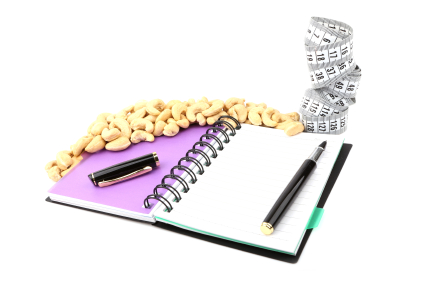
nutrition diary

Keeping a food journal can help you track patterns of emotional eating. (pic: istockphoto.com/nndrin)

Anyone who keeps a journal knows that writing your thoughts and feelings down every day can help identify patterns in your emotions. The daily act of journaling can be healing because it’s an outlet for what’s pent up inside. And it can help you come to terms with difficult events in your life.

Journaling is also proving to be a tool to help you make seismic changes in behaviour. A self-confessed ’emotional eater’ in the US, Charmaine Jackson, has revealed that daily food journaling helped her shed half of her body weight. You can read her full story on CNN. She meticulously recorded everything she ate and drank – and what her mood was like – over five years and 14 journals. She noted she would turn to food when she felt stressed or wanted to cheer herself up, and she would mindlessly munch on junk food while watching TV. “The food journal was my truth serum,” says Charmaine. “It made me be honest with myself.”

Charmaine combined food journaling with exercise and advice from a dietician. But we can see from Charmaine’s story that a food journal has these benefits:

  • You become aware of your eating patterns and bad habits.
  • You can track the emotional reasons behind what and when you eat.
  • It can make you more mindful about eating.
  • It encourages you to take responsibility for what you’re eating.
  • You can feel empowered to make meaningful and lasting changes.

So, instead of tucking into a family pack of crisps next time you’re watching a movie on the sofa, why not reach for pen and paper instead?

Praise kids for what they do – not who they are – to build self-esteem

'Person praise' can make a child feel shame when she does something wrong. (pic: istockphoto.com/Discovod

‘Person praise’ can make a child feel shame when she does something wrong. (pic: istockphoto.com/Discovod

You might think that praising a child with low self-esteem for his or her personal qualities might build their confidence and self-worth. But a study shows that giving this type of praise can backfire, and children can feel shame when they don’t succeed at something.

It’s better to praise the behaviour rather than the person. That’s the conclusion drawn by researchers at Utrecht University in the Netherlands. Instead of saying ‘you’re great’, tell a child ‘you did a good job’. Being specific about what exactly they did well also helps to build self-esteem. And when they do fail at something, it feels like a temporary setback rather than an utter failure for which they are to blame. The study distinguishes between ‘person praise’ and ‘process praise’. Person praise puts the focus on the self, and therefore the child will blame himself if something goes wrong.

“Adults may feel that praising children for their inherent qualities helps combat low self-esteem, but it might convey to children that they are valued as a person only when they succeed,” says Eddie Brummelman, lead researcher at Utrecht University. “When children subsequently fail, they may infer they are unworthy.”

Shame is an incredibly difficult emotion to come to terms with as an adult coming to therapy. This study gives an interesting insight into the seeds of some of that shame in adulthood. And may spur parents to give a different sort of praise in future.