Why stress makes the world stink

Stress and anxiety can make benign odours stink. (pic: istockphoto.com/kyolshin)

Stress and anxiety can make benign odours stink. (pic: istockphoto.com/kyolshin)

Smell is one of the most powerful sense for evoking memories and emotions. But researchers have discovered that stress and rewire the brain to make even benign odours stink.

Scientists from the University of Wisconsin-Madison used brain-imaging technologies to discover how smells influence emotional centres in the brain. People in the study were asked to look at disturbing words and pictures, and were then exposed to some neutral smells before having an MRI scan. As their stress and anxiety increased, their reaction to these neutral smells became more negative. The study showed the researchers that two independent circuits of the brain — one for processing smells, the other for emotion — “become intertwined under conditions of anxiety”.

Professor of psychology Wen Li, who led the study, says: “After anxiety induction, neutral smells become clearly negative. People experiencing an increase in anxiety show a decrease in the perceived pleasantness of odours. It becomes more negative as anxiety increases. We encounter anxiety and as a result we experience the world more negatively.”

Mental health is key determinant of happiness, says global report

World Happiness Report 2013Mental illness has more effect on misery levels across the globe than physical illness, income or unemployment. That’s according to the World Happiness Report 2013 from the UN’s General Assembly, which concludes that there is a relationship between the scale of mental illness and the levels of national happiness.

About 10% of the world’s population suffers from depression or anxiety, and these disorders account for a fifth of all disability – putting pressure on productivity and the economy. However, the report adds that governments are not prioritising mental health, or putting their money where their misery is, as only a third of people who need treatment are receiving it. And it calls on schools and workplaces to be more mental-health conscious.

It says: “Good, cost-effective treatments exist for depression, anxiety disorders and psychosis, and the happiness of the world would be greatly increased if they were more widely available.”

Interestingly, the report details factors from childhood that impact on life satisfaction as an adult. Number one is the child’s emotional development, followed by behaviour and intellectual development. The most important family influence is the mother’s emotional health.

The happiest country in the report is Denmark, followed by Norway, Switzerland, Holland and Sweden. The US comes in at 17th, and the UK is 22nd in the list. Factors the UN takes into consideration when assessing happiness are: “real GDP per capita, healthy life expectancy, having someone to count on, perceived freedom to make life choices, freedom from corruption, and generosity”.

The report concludes that subjective wellbeing has a huge influence on communities and the economy. “People who are emotionally happier, who have more satisfying lives, and who live in happier communities, are more likely both now and later to be healthy, productive, and socially connected. These benefits in turn flow more broadly to their families, workplaces, and communities, to the advantage of all.”

Later-life crisis creates ‘silver sufferers’, says research

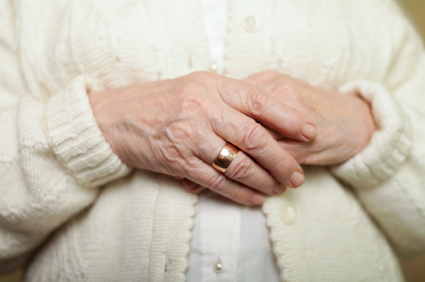
A later life crisis can be transformative in a positive or negative way. (pic: istockphoto.com/belory4ka)

A later life crisis can be transformative in a positive or negative way. (pic: istockphoto.com/belory4ka)

Move over, mid-life crisis. It’s the later-life crisis that’s becoming more of a concern for the helping profession. A third of people say they’ve had a life crisis in their 60s, in research by University of Greenwich psychologist Dr Oliver Robinson. How they respond to the crisis can determine the quality of the rest of their lives.

Men and women experience life crisis equally, with 32% of male respondents and 33% of female saying they’d had a life crisis since the age of 60. Reasons for the crisis – which is defined as two or more stressful events – include bereavement, illness or injury – as well has caring for a loved one who is ill or disabled.

A life crisis can trigger an existential anxiety about frailty and death. People can either respond by living life to the full and enjoying every moment, or they can become withdrawn and increasingly isolated.

Dr Robinson says: “It seems that when loss-inducing events occur together or in close proximity in time, a person’s capacity to cope in their 60s is overwhelmed and a later life crisis is precipitated. This range of reactions suggests that later life crisis is always transformative, but this transformation can lead towards either growth or decline.”

Anxiety + alcohol = emotional attachment to Facebook, says study

Anxious students who use alcohol are more likely to connect with others through Facebook. (pic: istockphoto.com/FotoFabbrica)

Anxious students who use alcohol are more likely to connect with others through Facebook. (pic: istockphoto.com/FotoFabbrica)

Students who feel lonely and anxious and who turn to alcohol are more likely to have an emotional attachment to Facebook. That’s the main finding of a study carried out at the University of Missouri.

The research among 229 students discovered that Facebook was a way to connect with others when feeling lonely or anxious – and those with higher levels of anxiety and alcohol use were more inclined to turn to Facebook to ease their anxieties.

“People who perceive themselves to be anxious are more likely to want to meet and connect with people online, as opposed to a more social, public setting,” says study author Russell Clayton. “Also, when people who are emotionally connected to Facebook view pictures and statuses of their Facebook friends using alcohol, they are more motivated to engage in similar online behaviors in order to fit in socially.”

Students who use marijuana were reported not to have emotional connectedness with Facebook.

How to make stress your cheerleader

Think of stress differently: perhaps it's there to cheer your performance.

Think of stress differently: perhaps it’s there to cheer your performance.

Stress doesn’t always have to be bad. The sweaty palms, dry mouth and butterflies in your stomach can be turned to your advantage – if you just think about stress differently.

Stress symptoms before speaking in public, for example, can be just the same as an extreme ‘fight or flight’ reaction. It can feel like something bad is about to happen. “But those feelings just mean that our body is preparing to address a demanding situation,” says Jeremy Jamieson, assistant professor of psychology at the University of Rochester. “The body is marshalling resources, pumping more blood to our major muscle groups, and delivering more oxygen to our brains.”

Jeremy researched the impact of stress by putting two groups of people – some of whom were prone to social anxiety disorder – in a stressful public-speaking situation. One group was told about the positive aspects of stress, and was asked to interpret any stress symptoms as beneficial. A second group was given no preparation about stress. Unsurprisingly, members of the first group felt they had more resources to cope with the task, even those with social anxiety disorder, and their physiological responses were less extreme than the second group.

Jeremy says: “Our experience of acute or short-term stress is shaped by how we interpret physical cues. We construct our own emotions.”

  • Think of stress as giving you that extra edge to your performance. The adrenalin is there to help, not hinder you.
  • Reframing the way you think about stress can help make it your master, not your servant.
  • If you feel butterflies coming on, breathe in the adrenalin from your belly through your nose. Breathe it back out through the muscles of your body, visualising that it’s touching the furthest reaches of your finger and toes. 
  • That way, stress can become your cheerleader, not your enemy.

Feeling unloved as a child can lead to anxiety as an adult

Lack of love as a child can lead to anxiety as an adult. (pic: istockphoto.com/nsilcock)

Lack of love as a child can lead to anxiety as an adult. (pic: istockphoto.com/nsilcock)

Adults who perceive a lack of parental love as a child could be more likely to suffer anxiety-related issues.

That was the main finding from a study by the Surrey Institute of Clinical Hypnotherapy (SICH), which looked at 100 clients with social phobia or agoraphobic-type anxiety over a three-year period. There were 81 out of the 100 who believed their parents never loved them, or removed their love (through divorce, death or working away) before the child was 13.

When parental love was removed the child had feelings of low self-worth, and felt ‘not good enough’ when they grew up. This can lead to anxieties such as fear of driving on motorways, or fear of crowded places. Where parental love never existed (through not showing affection, for example, or where one of the parents was never around) the child lacked confidence, particularly in social situations. This can carry on to adulthood and manifest as fear of public speaking or fear of being the centre of attention.

The sample of clients analysed by SICH is obviously self-selecting, as they all chose to come for hypnotherapy to alleviate their anxiety. But the survey does give some idea of how lack of love can affect the development of a child. SICH says parents should listen to their children, show affection, play with them every day, and stick to boundaries.

Red Nose Day helps to break the taboos around mental health

anima red nose dayDepression is often suffered in silence: you soldier on, not able to feel any enjoyment in life, and the weight can be crushing. But celebrities suffer from depression too, as X Factor winner James Arthur has shown in his public support for Red Nose Day.

James has spoken about the depression and anxiety he has suffered in the past – and how making and singing music has helped alleviate his pain. He was visiting the STAMP Revisited mental-health project in the North East, which is one of the programmes supported by Comic Relief funds, and hopes that he’ll be able to break some of the taboos around depression. James is quoted as saying: “In my life I’ve had some low points, so now it’s really important to give something back because I’m really passionate about changing people’s perceptions about mental health.”

When someone in the public eye speaks out, perhaps it will encourage others to reach out for help too.

Hiding from your fears won’t make them go away

Avoiding your fears won't make them go away. (pic: istockphoto.com/Omelchenko)

Avoiding fear as a child can lead to anxiety. (pic: istockphoto.com/Omelchenko)

Picture a little child playing, and she’ll cover her eyes when there’s something scary and doesn’t want to see, and she’ll make everything magically go away. But unfortunately when she opens her eyes again the scary thing is still there. And avoiding scary situations is more likely to make children anxious, according to research from the Mayo Clinic.

It studied 800 kids aged seven to 18 to measure their avoidance habits. It asked their parents whether the child asked to do something later if she was worried about it. And researchers also asked the children to describe what they do when they’re scared – for example: “When I’m scared of something I don’t go near it.” They also measured the kids’ levels of anxiety.

The study found that levels of avoidance could predict future development of anxiety, as the children who described avoidance behaviours at the start of the research tended to be more anxious a year later. Dr Stephen Whiteside from the Mayo Clinic says this is a way of gauging how children can develop anxiety disorders when they’re older.

He recommends cognitive-behavioural therapy (CBT) as a way of gradually exposing children to what they’re afraid of. Avoidance scores dropped by half among children who had CBT. “Kids who avoid fearful situations don’t have the opportunity to face their fears and don’t learn that their fears are manageable,” adds Dr Whiteside.

One in 10 new mothers experiences obsessive-compulsive symptoms

Most new mums' anxiety about their baby alleviates within six months (pic: istockphoto.com/c12)

Most new mums’ anxiety about their baby alleviates within six months (pic: istockphoto.com/c12)

Psychoanalyst Donald Winnicott says the only way to be a good mother is to be a “good-enough mother”. But “good enough” can feel a long way off for new mums struggling with feeding, nappies, sleeping, exhaustion and worries about her newborn baby.

For most new parents, it’s natural to feel some anxiety when their baby arrives. Winnicott adds that new mothers become totally absorbed with their baby “to the exclusion of other interests, in a way that is normal and temporary”.* But that maternal preoccupation can become all-consuming and develop into obsessive-compulsive symptoms for 11% of new mothers between two months and six months after giving birth. This was the core finding in a study by Northwestern University Feinberg School of Medicine, which says that OCD symptoms in the general population, by comparison, are around 2% or 3%.

The researchers say that the symptoms are normally due to hormonal changes, or adapting to the ‘stress’ that the pregnancy and birth may have brought on. “It may be that certain kinds of obsessions and compulsions are adaptive and appropriate for a new parent, for example those about cleanliness and hygiene,” says study senior author Dana Gossett. “But when it interferes with normal day-to-day functioning and appropriate care for the baby and parent, it becomes maladaptive and pathologic.” The researchers classify obsessions as “unwanted and repeated thoughts or images that create anxiety”.

For many women the anxiety can disappear within six months. This article on Yahoo!, Why anxiety is a natural state for new parents, argues that new mums and dads should just be left to get on with finding their own way as parents.

But for other new mothers, OCD can be linked with depression – especially if the symptoms appear a while after the birth. That’s the time to reach for support, where possible. This article by Bryony Gordon in The Telegraph, OCD takes the baby blues to a whole new level, is a touching account of her own experiences with OCD in pregnancy, and how she found support.

The organisation Maternal OCD offers advice and support on obsessive-compulsive disorder in motherhood.

(*quote from D. W. Winnicott, Michael Jacobs, SAGE Publications, London 2008, p. 48)