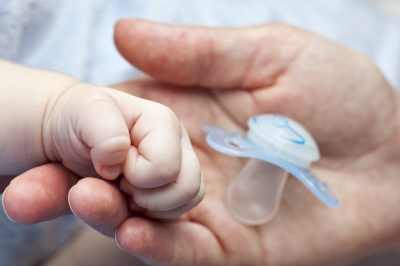
Could your stress levels today be picked up from mother when you were a baby?

Infants absorb stress and anxiety from their mothers, says research. (pic courtesy of Serge Betasius Photography/freedigitalimages.net)

Infants absorb stress and anxiety from their mothers, says research. (pic courtesy of Serge Betasius Photography/freedigitalimages.net)

Now and again, a new piece of research comes along that explains so much that my counselling clients are experiencing today. Such pieces of research pretty much sum up the reason why psychotherapy exists: to help heal the wounds of our past and come to terms with what was painful on our childhoods.

The issue with the past, however, is that so much of that early wounding happens in a pre-verbal phase. It’s when we are tiny babies when we don’t have words to express what’s going on that some of those hurts can happen. People may think that babies won’t know the difference. But, as adults having a crisis in later life, feeling unable to cope, we can often feel left with an unease that something isn’t right. We just can’t put it into words. It’s just a feeling that keeps playing out in unhelpful behaviours, situations and cycles that they feel stuck in. And some of those behaviours and feelings may be in response to the nurturing – or otherwise – we experienced as infants.

So, what’s this piece of research that I feel resonates with the wounds in my clients? (more…)

Why everyone needs a ‘Beckham Lego’ moment

Lego and games are more than child's play: they can help calm stress and anxiety

Lego and games are more than child’s play: they can help calm stress and anxiety

Footballer David Beckham’s admission that he plays with Lego to calm him down has received widespread coverage in the press. He finds it ‘therapeutic’ to do complicated builds, and it helps him cope with anxiety. He says it helps calm him down.

Anyone who has watched children playing with building bricks will see the look of concentration on their faces: they won’t be distracted from their creation until it is absolutely finished. They are committed and completely absorbed in what they are doing.

There is a school of thought that proves this kind of mind-absorbing, relaxing activity is not confined to children and ex-footballers.

Happiness experts and positive psychologists say that people can feel more fulfilled when they discover an activity through which they feel ‘flow’. Positive psychologist Mihaly Csikszentmihalyi has posted a video on Ted contributing to the body of evidence that happiness comes from “a state of heightened focus and immersion in activities such as art, play and work”.

So, how can you achieve flow? I think it can depend on where you were as a child, and what helped you feel free, safe and exuberant. Or it can be an activity where you are so absorbed in the monotony or repetition of it that it makes you forget all your troubles. It uses another part of the brain that isn’t engaged in worrying, thinking or planning.

Examples? Cooking. DIY. Jigsaws. Painting (walls as well as canvases). Board games. Writing. Dancing. Gardening. Flower arranging. Knitting. Stitching. Golfing. Swimming. Reading.

The common denominator? As well as being a switch-off, these activities can be satisfying as well as creative. There can be an exciting and tangible outcome as a result of being in ‘flow’. And for anxiety management, anything that takes the mind off what is troubling you has to be of benefit to how you manage anxious or stressful thoughts and feelings.

What’s your secret pleasure – which you are perhaps not indulging currently – that helps transport you to more creative and fulfilling realms…?

Can managing your stress help you lose weight?

Research shows that stress management can be effective for weight loss. (pic: istockphoto.com/Pogonici)

Research shows that stress management can be effective for weight loss. (pic: istockphoto.com/Pogonici)

If you find yourself reaching for the biscuit tin when you’re stressed, or if you consider yourself an ’emotional eater’, then a new study on stress management may be of interest to you.

A researcher from the University of Kentucky College of Agriculture, Food and Environment wanted to test and compare the effectiveness of two interventions that help people lose weight and keep it off. One was an intuitive-eating programme – where people pay attention to their bodies, only eating when they’re hungry, and stopping when they’re full. The other was a stress management intervention, which taught people better ways of dealing with their stress.

Associate professor Kelly Webber says: “With weight loss we know that if you count calories and exercise you will lose weight. However a large percentage of people tend to regain that weight.  “I wanted to explore a couple of new avenues for producing lasting weight loss.”

The study involved 26 participants split into an intuitive eating group and a stress management group, meeting for 75 minutes twice a week for seven weeks. People in the stress management group lost 17 pounds and saw a significant drop in their blood pressure during that period. People in the intuitive eating group did not lose a significant amount of weight or see a decline in blood pressure. The stress management group had kept the weight off 14 weeks later.

Ms Webber says: “So many people in my weight loss studies say ‘I’m a stress eater or I’m an emotional eater’. This stress management-based intervention seems to be getting at the root of the problem.” She says she is “encouraged” by the results and plans to explore them in further studies.

The link between stress and eating is an interesting one. To start exploring for yourself how you respond to stress, start keeping a food journal, noting down what you eat and when  – and paying attention to the triggers that prompt you to reach for comfort food.

If you only do five things to combat job stress in 2014…

How can you avoid repeating the job stresses of last year? (pic: istockphoto.com/Pashalgnatov)

How can you avoid repeating the job stresses of last year? (pic: istockphoto.com/Pashalgnatov)

… do these ones.

OK. So, Christmas is over and you’re suddenly thrust back into the hotseat. All the things you promised yourself you’d change haven’t. Half a day back at your desk and you’re already in meltdown. Festive excesses are playing havoc with your waistline, your energy levels and your tolerance of the annoying people chomping crisps on the commuter train. And you find your colleagues far too focused on the crucial client meeting you really, really did mean to prepare for the day after Boxing Day.

In short, you feel back to where you started. But, there are five things you CAN do straight away to feel you’re back in control in 2014 and not under the pull of all those stresses from last year… (more…)

Midlife stress at work = more illness in later life, says study

Researchers have found a link between midlife work stress and illness in older age. (pic: istockphoto.com/DOUGBERRY)

Researchers have found a link between midlife work stress and illness in older age. (pic: istockphoto.com/DOUGBERRY)

If you’re stressing out at work in middle age – subjecting yourself to physical and mental strain – then you could be facing more hospital visits as you get older. That’s according to a long-term study of more than 5,600 public-sector workers aged 44-58 in Finland.

Researchers at the University of Jyväskylä in Finland found a direct correlation between the amount of job strain suffered in middle age and the number of days in hospital in people aged 65+. Physical job strain was classed as breathlessness, sweating and heart palpitation. Mental job strain was classed as how much control people they felt they had in their daily worklife compared with the demands put on them in terms of work volume and scheduling.

There was a strong link between physical and mental strain and hospitalisation among men – but only physical strain showed a link for women.

Feelings of stress and strain are subjective, found the study. Much depends on a subjective view of what is stressful and what isn’t. “Occasional feelings of job strain are not necessarily a bad thing, but persistent high job strain has been identified as a health hazard,” said lead researcher Mikaela von Bonsdorff.

One to think about when heading back to work after the Christmas holidays.

Lower your expectations if you want to avoid ‘Stressmas’

Not everyone feels warm and jolly at Christmas. (pic: istockphoto.com/javarman3)

People feel the pressure to prepare a perfect picture-postcard Christmas. (pic: istockphoto.com/javarman3)

Think of the ideal Christmas and you’ll likely conjure up images of families sitting cosily around a tree with cheeks of pink and presents of gold – everyone happy, jolly and getting on wonderfully. At least, that’s what the media would have us believe. With so many tips on how to stage-manage Christmas Day, there has arguably never been so much pressure on us to be perfect. And for many that image is impossible to make reality, because they may not have anyone to celebrate Christmas with – or because they just become far too stressed to enjoy it. For many, Christmas has become more like ‘Stressmas’.

The BBC reports that people suffering social anxiety have a far harder time at Christmas because of the pressure of having to spend time with people they may not know or like, the stress of finding the ideal present, and because they may obsess far too much about how they will come across to other people. It’s a time when we’re all meant to be happy, and that can be hard to fake when you’re the only person in the room not enjoying yourself.

Then there’s the stress of the person who’s tasked with keeping everyone happy: preparing, buying, cooking and entertaining even the most reticent or rowdy relatives. The Washington Post reflects on the increased stress that women feel during the festive season: they feel twice as much overwhelm as men. So much so that (more…)

Heavy texting affects sleep and creates stress, says study

Fear of missing a text can keep people awake during the night. (pic: istockphoto.com/idal)

Fear of missing a text can keep people awake during the night. (pic: istockphoto.com/idal)

Take a look round any train carriage, or indeed any social situation, and you’ll see how hard it is for people to put their mobile phones down. But this fear of missing out on a text, or even of misinterpreting what someone has texted, is ramping up stress levels and affecting people’s sleep.

Researchers from Washington and Lee University tested the effects of night-time testing on college students, the majority of whom would keep their phones beside their bed, or even under their pillows, so they could respond to texts during the night. They asked study participants to keep a sleep diary, and assessed results according to the Pittsburgh Sleep Quality Index, which measures the amount of sleep, the number of disturbances, and how long it takes to fall asleep.

The Telegraph reports the study findings: the more texts a person sends, the worse the quality of sleep. Young people also become more stressed around their friendships, as the meaning  of text messages can sometimes be misconstrued. The moral of the story is not to carry out any conflict or arguments via text, but to take it face-to-face instead. And not to take your mobile phone to bed.

Why stress makes the world stink

Stress and anxiety can make benign odours stink. (pic: istockphoto.com/kyolshin)

Stress and anxiety can make benign odours stink. (pic: istockphoto.com/kyolshin)

Smell is one of the most powerful sense for evoking memories and emotions. But researchers have discovered that stress and rewire the brain to make even benign odours stink.

Scientists from the University of Wisconsin-Madison used brain-imaging technologies to discover how smells influence emotional centres in the brain. People in the study were asked to look at disturbing words and pictures, and were then exposed to some neutral smells before having an MRI scan. As their stress and anxiety increased, their reaction to these neutral smells became more negative. The study showed the researchers that two independent circuits of the brain — one for processing smells, the other for emotion — “become intertwined under conditions of anxiety”.

Professor of psychology Wen Li, who led the study, says: “After anxiety induction, neutral smells become clearly negative. People experiencing an increase in anxiety show a decrease in the perceived pleasantness of odours. It becomes more negative as anxiety increases. We encounter anxiety and as a result we experience the world more negatively.”

The ‘always on’ culture makes holidays a struggle for Brits

Even beautiful beaches can't distract stressed holidaymakers from checking their work emails.

Even beautiful beaches can’t distract stressed holidaymakers from checking their work emails.

The bank holiday week could offer the final opportunity to take a break and enjoy what’s left of the summer. Yet Brits struggle to unwind when they go away on holiday, taking on average four days, eight hours and 24 minutes before they can finally relax. That’s according to a survey by recruitment site Monster.co.uk.

A third of Britons take five days to relax, 40% take four days, one in 10 manages to unwind after just one day – and yet 18% never get into holiday mode at all. Why? Because they can’t switch off from work, and will continue to check their work emails in between trips to the beach and the pool. They may have flown miles away to escape the daily routine, but succeed only in bringing their stresses along with them.

Monster.co.uk’s Michael Gentle said: “The fact it is taking so long for workers to unwind on holiday is indicative of the ‘always switched on’ culture we now live in. By not relaxing fully, workers are putting themselves at risk of burnout, which will be detrimental to them and their employer in the long run.”

How to make stress your cheerleader

Think of stress differently: perhaps it's there to cheer your performance.

Think of stress differently: perhaps it’s there to cheer your performance.

Stress doesn’t always have to be bad. The sweaty palms, dry mouth and butterflies in your stomach can be turned to your advantage – if you just think about stress differently.

Stress symptoms before speaking in public, for example, can be just the same as an extreme ‘fight or flight’ reaction. It can feel like something bad is about to happen. “But those feelings just mean that our body is preparing to address a demanding situation,” says Jeremy Jamieson, assistant professor of psychology at the University of Rochester. “The body is marshalling resources, pumping more blood to our major muscle groups, and delivering more oxygen to our brains.”

Jeremy researched the impact of stress by putting two groups of people – some of whom were prone to social anxiety disorder – in a stressful public-speaking situation. One group was told about the positive aspects of stress, and was asked to interpret any stress symptoms as beneficial. A second group was given no preparation about stress. Unsurprisingly, members of the first group felt they had more resources to cope with the task, even those with social anxiety disorder, and their physiological responses were less extreme than the second group.

Jeremy says: “Our experience of acute or short-term stress is shaped by how we interpret physical cues. We construct our own emotions.”

  • Think of stress as giving you that extra edge to your performance. The adrenalin is there to help, not hinder you.
  • Reframing the way you think about stress can help make it your master, not your servant.
  • If you feel butterflies coming on, breathe in the adrenalin from your belly through your nose. Breathe it back out through the muscles of your body, visualising that it’s touching the furthest reaches of your finger and toes. 
  • That way, stress can become your cheerleader, not your enemy.