Looking at old photographs can cheer you up

anima photographs

Reminiscing over old photographs can soothe your emotions.

Looking through old photographs can be good for your mental health and your memory. Even flicking through your pics and posts on Facebook can boost your wellbeing, according to new research.

The University of Portsmouth found that three-quarters of people they studied looked at their own photos on Facebook when they were feeling low so they could ‘self-soothe’. It can be comforting to reminisce about happier times, she says, and looking at your pics can be “as soothing as a walk in the park”.

Psychologist Dr Clare Wilson from the University of Portsmouth says looking at our photos is a way of connecting with our past selves when our present selves need reassurance. She adds: “When in the grip of a negative mood, it is too easy to forget how good we often feel. Our positive posts can remind us of this.”

This form of ‘reminiscence therapy’ – connecting with old memories to self-soothe and help stop depressive moods getting worse – can be practised anytime, anywhere: the study showed that 70% of people prefer to access their Facebook photos and posts via their phones.
How to express your true feelings in words on World Poetry Day

anima world poetry day

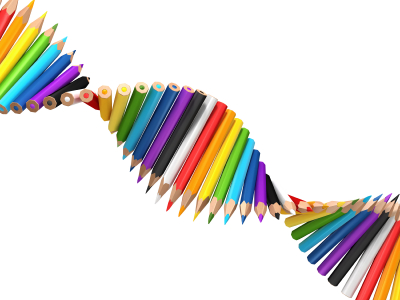
Let poetry capture the DNA of your thoughts and feelings. (pic: istockphoto.com/LoopAll)

“Poetry is when an emotion has found its thought and the thought has found words.” Robert Frost

Today is the UN’s World Poetry Day, a celebration of creativity, diversity in language and individual expression in the written word.

Whether you journal regularly, scribble down a few thoughts occasionally, or craft some beautiful prose when the muse strikes, the act of writing your thoughts down without censoring what’s coming out of your pen can be tremendously therapeutic. Here’s how to get in the healing mood for writing in rhyme –  though poems don’t always have to rhyme:

  • The act of putting pen to paper and letting it flow can be cathartic. Grab a pen and let your thoughts flow onto the page. 
  • A poem is a way of accessing a deeper part of yourself that you perhaps intuited was there but didn’t know for sure if it existed. Let it have some space on the page. 
  • Don’t worry about crafting. A poem can be a few lines long, so there’s no pressure to write a lot. 
  • Don’t censor as you write. Tell your mind to get out of the way and let something deeper come through. Let the feeling have its rise and fall.
  • No one ever sees your words but you, so don’t write as if someone were looking over your shoulder.
  • Choose ink colours that represent your mood: try red for anger, blue for sadness, or orange for power. Then experiment with colours you don’t like so much, and see what emerges.
  • Stand back and allow the true message to filter through you. Writing a poem can be surprising and revealing when you read it back.
  • Enjoy your words. Giving your thoughts a poetry shape can leave you with a huge sense of achievement.
  • Appreciate the little piece of you that has found expression in the world.

Remember to count your blessings on International Happiness Day

ImageGenHappy International Happiness Day. The UN has decreed that the globe will be happy today. It has decided that a nation’s happiness will no longer be decided by its success or power but by the compassion and wellbeing of its people.

But I think happiness is more personal and a subtle than a group hug that wraps its arms around the globe. It’s an initiative to applaud, but each person’s happiness is surely individual? How do you define happiness? By reaching out to help someone? By having more meaning in your life? By spending time with loved ones? Or are you seeking that elusive happiness through work, relationships, money, belongings and status symbols?

Action for Happiness – “a movement for positive social change” – helpfully provides 10 keys to happier living. It also says that happiness comes from being grateful for what you’ve got rather than looking to all the things you’re living without. It says that “people who are grateful tend to be happier, healthier and more fulfilled”.

So perhaps today is for a day for counting our blessings. In the words of Oscar Wilde’s Dorian Gray, perhaps we can appreciate “the moments of life that is itslef but a moment”.

Red Nose Day helps to break the taboos around mental health

anima red nose dayDepression is often suffered in silence: you soldier on, not able to feel any enjoyment in life, and the weight can be crushing. But celebrities suffer from depression too, as X Factor winner James Arthur has shown in his public support for Red Nose Day.

James has spoken about the depression and anxiety he has suffered in the past – and how making and singing music has helped alleviate his pain. He was visiting the STAMP Revisited mental-health project in the North East, which is one of the programmes supported by Comic Relief funds, and hopes that he’ll be able to break some of the taboos around depression. James is quoted as saying: “In my life I’ve had some low points, so now it’s really important to give something back because I’m really passionate about changing people’s perceptions about mental health.”

When someone in the public eye speaks out, perhaps it will encourage others to reach out for help too.

“Use it or lose it”: be curious and active to keep dementia at bay, say scientists

anima dementia active lifestyle

Neuroscientists recommend a socially and physically active lifestyle to delay the onset of dementia. (pic: istockphoto.com/jupiter55)

Be socially active, be curious about life and other people, and keep your body fit if you want to delay the onset of dementia. That’s the advice from neuro-scientists who’ve studied what keeps the mind and memory functioning and alive.

A study shows that exposure to new activities, and seeking out rich and stimulating environments, can delay the formation of a particular protein in the brain that stops the cells communicating with each other, and can erode the person’s ability to learn, remember and pay attention. Scientists from the Center for Neurologic Diseases in the Brigham and Women’s Hospital Department of Neurology say that “prolonged exposure to a richer, more novel environment, even in middle age” can protect the hippocampus, the part of the brain susceptible to the effects of that protein – thus helping to preserve short- and long-term memory.

This piece of research says social and stimulating activity is more effective than aerobic exercise. However, a separate study from King’s College London says there is link between lifelong exercise and cognitive wellbeing.

The researchers interviewed 9,000 people over the years as they grew from age 11 to age 50. The study found that people who exercised every week performed better when tested on memory, learning, attention and reasoning at the age of 50 than people who exercised a couple of times a month or less. Fit men lost a third less of their brainpower, while fit women lost 25% less of their brainpower.

Report author Dr Alex Dregan says that while 150 minutes’ exercise per week is recommended, some activity rather than no exercise at all could benefit cognitive wellbeing, adding: “It’s widely acknowledged that a healthy body equals a healthy mind.”

While individuals can do their bit to stay healthy, experts are calling for more funding for research into causes and cures for dementia. The statistics about dementia are stark. One in three people over the age of 65 is likely to get Alzheimer’s, which is now the 10th leading cause of death in the UK, according to the Alzheimer’s Society.

Gaming improves wellbeing in older generation, says academic study

Psychologists say older people who play video games are happier than those who don’t. (pic: istockphoto.com/Feverpitched)

You might traditionally expect people around retirement age to favour pursuits like crosswords, bridge, bowls or knitting. But scientists have shown that people aged 60-plus are active in more unusual ways. They’ve found that the senior generation who play video games are happier than those who don’t.

Psychologists from North Carolina State University in the US researched ‘Successful aging through video games‘ with 140 people aged 63 and over. They wanted to discover the differences in emotional wellbeing and depression between older adults who play video games and older adults who don’t game at all.

They found that older people who played video games regularly or occasionally had higher levels of wellbeing and fewer incidence of depression compared with older people who aren’t gamers. “Findings suggest that playing may serve as a positive activity associated with successful aging,” concluded the researchers.

Is social media good or bad for your mental health?

Social media can offer a support network that doesn’t exist offline. (pic: istockphoto.com/zakokor)

There was a tweet doing the rounds recently that said: “Gym: full of people you see every day but never speak to. Twitter: people you never see but speak to every day.”

The tweet jokily sums up the role social media has come to play in our lives. But is your daily life on Twitter/ Facebook/Pinterest etc always so light-hearted?

This is a debate that mental health charity Mind put to the Twittersphere today. It asked: is #twittergood or #twitterbad for your mental health?, which understandably prompted a lot of responses from tweeters. Here’s my interpretation of the two sides of the debate:

Social media is ‘good’ when:

  • Connecting with someone who totally understands what you’re going through is a relief and a saviour. You feel you’re not the only one. It’s great to have that support network.
  • Finding information and resources you never knew about but could be helpful to you.
  • The anonymity of online ‘friends’ can help you become more open. Being honest about feelings can help you deal with and come to terms with them. 
  • The ‘social’ aspect of social media can make you feel less isolated. Interacting with someone online can give you a purpose, a joy, a sense of belonging.

Social media is ‘bad’ when:

  • The online world becomes a substitute for face-to-face interaction. Do you prefer the company of your virtual friends and feel you therefore don’t need to reach out to your ‘real-world’ friends?
  • It becomes an exposed forum for nasty comments. This mostly happens to people in the public eye, but the cloak of anonymity can make some people ‘braver’ in their criticisms. It can be tricky knowing how to deal with comments from people who don’t agree with you.
  • You feel the need to put on a ‘brave face’ when you least feel able to. The pressure to post photos and upbeat comments can be disheartening and exhausting and leave you out of touch with the authentic you.
  • It becomes an obsession. Constantly checking how many ‘likes’ and ‘follows’ you’ve How many people have responded. Relationships and friendships have broken down because someone needs to monitor their phone during meetings and social gatherings. Even during the night. The newly coined term for this is ‘social media anxiety disorder’. Check out: do you have the signs?

The counselling profession is working towards helping people with issues related to social media anxiety and online bullying, and is providing therapy online. Many people, used to interacting virtually, prefer the anonymity of e-counselling. The UKCP is setting up New Media in Psychotherapy Interest Group to explore how psychotherapists can best help people in the social media sphere. And for more of an insight, check out this overview of social media and online therapy in the BACP’s article on E-therapy, equality and access.

Will new Mental Health Discrimination law end the stigma of mental illness?

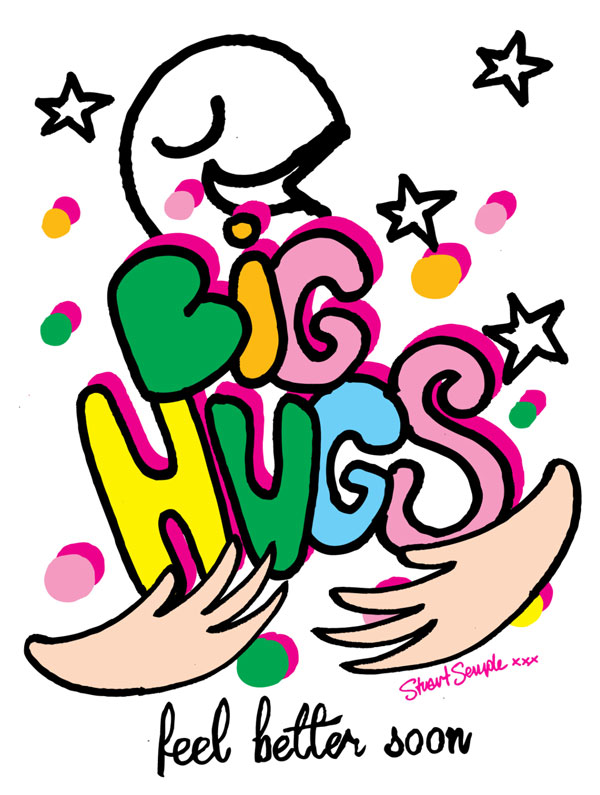
get well soon card

This is just one of the get-well-soon e-cards from Time to Change, aiming to challenge the mental illness stigma.

If you had a friend with a mental illness, would you send them a get-well card? If your answer’s ‘no’ or ‘not sure’, then you’re in the majority. Only one in four people experiencing a mental health issue has received a card from well-wishers, according to a study by Time to Change, an anti-stigma campaign run by mental health charities Mind and Rethink Mental Illness.

While 79% of people would consider sending a card to someone with a physical health problem, only 50% would do the same if it related to mental health. And a third (32%) wouldn’t know if it were appropriate. A range of get-well-soon e-cards is key to the campaign to get people talking about mental illness.

The efforts of campaigning groups have been rewarded by the UK government, which has made it illegal on the grounds of mental illness. The Mental Health (Discrimination) Act 2013, which became law on 28 February, means that people with mental illness will no longer be barred from sitting on a jury, holding a company directorship, or being an MP.

Campaigners believe this law will help to turn the tide on mental illness, encouraging more people (more…)