Stories with mother help children make sense of their world

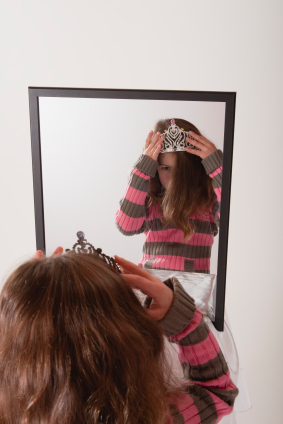
Hearing stories with mother helps children develop their own narratives about their lives. (pic: istockphoto.com/GeloKorol)

Hearing stories with mother helps children develop their own narratives about their lives. (pic: istockphoto.com/GeloKorol)

Mums are better than dads at telling stories to their children about past experiences, which helps kids develop their emotional skills.

This was the main finding from a piece of research called Gender Differences in Elaborate Parent-Child Emotion and Play Narratives. The researchers asked parents of children aged between four and five to reminisce about four past emotional experiences: one happy, one sad, a conflict with a peer and a conflict with a parent.

They found that mothers went into more detail when reminiscing with their children than fathers. They also included more emotional terms, which they then talked about with their kids. This helps children understand, develop and articulate their own feelings and point of view on these past experiences.

The researchers concluded: “Mothers appear to be helping children recount and understand their personal past more than fathers, and specifically, in working through difficult emotions that may facilitate emotion regulation skills.” The storytelling helps the children incorporate their own narratives into their lives.

For many adults who didn’t have such nurturing parents, coming to therapy to talk about their past, present and future can help them construct their own narrative and come to terms with what has happened to them. If you’d like to talk to a counsellor to help you make sense of your life, call 07956 823501 or email davanticounselling@gmail.com
Pressure to be ‘perfect’ gives children body-image issues

anima children body imageAnxiety about body shape is starting among children as young as four – and increasingly boys as well as girls have low confidence in their body image.

Four-fifths (78%) of teachers, lectures, support staff and leaders who responded to a survey by the Association of Teachers and Lecturers (ATL) say that girls suffer from low self-esteem because of societal pressure to be ‘perfect’, and half (51%) believe boys have low confidence about their bodies. Anxiety levels are also growing: 59% of staff say that female pupils feel anxious about their bodies, and 30% say the pressures affect boys too. And comments about their bodies can be sensitive and easily taken to heart by 55% of girls and 27% of boys.

Girls are more likely to go on diets, and boys are more likely to turn to extreme exercise to get the body they think they want. Girls as young as four are conscious of what they’re eating, and girls aged 10 have been known to go on diets. Teachers have also noted obsession with hair  among boys and girls.

Teachers believe airbrushed and unattainable images in the media are mainly to blame. Two-thirds think there is more pressure on children’s body image than 10 years ago – and 84% think  girls are under pressure to maintain a particular body image, compared with 66% for boys. The issue is that the children then make themselves miserable once they have fixated on a particular body and realise they probably won’t be able to achieve it.

ATL is calling for more education and awareness in schools about healthy eating and exercise, as well as the practices of airbrushing so that children understand what is real and what is fake. ATL general secretary Mary Bousted says: “Young people want to fit in and it’s a hard part of growing up, but the pressure to have the “perfect” body should not be at the detriment to children’s wellbeing and happiness.”

Looking at old photographs can cheer you up

anima photographs

Reminiscing over old photographs can soothe your emotions.

Looking through old photographs can be good for your mental health and your memory. Even flicking through your pics and posts on Facebook can boost your wellbeing, according to new research.

The University of Portsmouth found that three-quarters of people they studied looked at their own photos on Facebook when they were feeling low so they could ‘self-soothe’. It can be comforting to reminisce about happier times, she says, and looking at your pics can be “as soothing as a walk in the park”.

Psychologist Dr Clare Wilson from the University of Portsmouth says looking at our photos is a way of connecting with our past selves when our present selves need reassurance. She adds: “When in the grip of a negative mood, it is too easy to forget how good we often feel. Our positive posts can remind us of this.”

This form of ‘reminiscence therapy’ – connecting with old memories to self-soothe and help stop depressive moods getting worse – can be practised anytime, anywhere: the study showed that 70% of people prefer to access their Facebook photos and posts via their phones.

Why gratitude can improve our sense of self-worth

thank you

Gratitude can boost a sense of self-worth. (Pic: istockphoto.com/anyaberkut)

Never underestimate the power of thank-you. Gratitude bestows the giver and receiver with a sense of self-worth that is totally missing when a thank-you is absent or forgotten. This has been proven in research carried out by Francesca Gino from Harvard Business School. She discusses her findings in an article on the Harvard Gazette on The Power of Thanks.

Her psychology experiment showed that receiving an acknowledgement of feedback without gratitude produced a 25% level of self-worth among the receivers. However, 55% of the test group that received a thank-you alongside the feedback felt higher levels of self-worth. And more than double those who were thanked were likely to help the person out in the future (66% versus 32% who didn’t get a thank-you).

She says she hates to miss an opportunity to thank-you, as it is always worth the effort. “Receiving expressions of gratitude makes us feel a heightened sense of self-worth, and that in turn triggers other helpful behaviors toward both the person we are helping and other people, too.”

Other articles I like on the subject of gratitude are The transformative power of gratitude on Psychology Today and How gratitude can change your life on The Change Blog. They’re full of tips on how to make gratitude a welcome, mindful and compassionate part of your life.

A simple tip is to keep a ‘gratitude book’. Write 10 things you’re grateful for every evening and spot what a difference it can make to your wellbeing.

Remember to count your blessings on International Happiness Day

ImageGenHappy International Happiness Day. The UN has decreed that the globe will be happy today. It has decided that a nation’s happiness will no longer be decided by its success or power but by the compassion and wellbeing of its people.

But I think happiness is more personal and a subtle than a group hug that wraps its arms around the globe. It’s an initiative to applaud, but each person’s happiness is surely individual? How do you define happiness? By reaching out to help someone? By having more meaning in your life? By spending time with loved ones? Or are you seeking that elusive happiness through work, relationships, money, belongings and status symbols?

Action for Happiness – “a movement for positive social change” – helpfully provides 10 keys to happier living. It also says that happiness comes from being grateful for what you’ve got rather than looking to all the things you’re living without. It says that “people who are grateful tend to be happier, healthier and more fulfilled”.

So perhaps today is for a day for counting our blessings. In the words of Oscar Wilde’s Dorian Gray, perhaps we can appreciate “the moments of life that is itslef but a moment”.

“Use it or lose it”: be curious and active to keep dementia at bay, say scientists

anima dementia active lifestyle

Neuroscientists recommend a socially and physically active lifestyle to delay the onset of dementia. (pic: istockphoto.com/jupiter55)

Be socially active, be curious about life and other people, and keep your body fit if you want to delay the onset of dementia. That’s the advice from neuro-scientists who’ve studied what keeps the mind and memory functioning and alive.

A study shows that exposure to new activities, and seeking out rich and stimulating environments, can delay the formation of a particular protein in the brain that stops the cells communicating with each other, and can erode the person’s ability to learn, remember and pay attention. Scientists from the Center for Neurologic Diseases in the Brigham and Women’s Hospital Department of Neurology say that “prolonged exposure to a richer, more novel environment, even in middle age” can protect the hippocampus, the part of the brain susceptible to the effects of that protein – thus helping to preserve short- and long-term memory.

This piece of research says social and stimulating activity is more effective than aerobic exercise. However, a separate study from King’s College London says there is link between lifelong exercise and cognitive wellbeing.

The researchers interviewed 9,000 people over the years as they grew from age 11 to age 50. The study found that people who exercised every week performed better when tested on memory, learning, attention and reasoning at the age of 50 than people who exercised a couple of times a month or less. Fit men lost a third less of their brainpower, while fit women lost 25% less of their brainpower.

Report author Dr Alex Dregan says that while 150 minutes’ exercise per week is recommended, some activity rather than no exercise at all could benefit cognitive wellbeing, adding: “It’s widely acknowledged that a healthy body equals a healthy mind.”

While individuals can do their bit to stay healthy, experts are calling for more funding for research into causes and cures for dementia. The statistics about dementia are stark. One in three people over the age of 65 is likely to get Alzheimer’s, which is now the 10th leading cause of death in the UK, according to the Alzheimer’s Society.

Be mindful to stress less and sleep better

Mindfulness can benefit you day and night. (pic: istockphoto.com/2Mmedia)

Mindfulness can benefit you day and night. (pic: istockphoto.com/2Mmedia)

Mindfulness can have benefits during the night as well as the day, bringing peace of mind and more restful sleep, according to new research from the University of Utah.

People who describe themselves as mindful were proven to have more control over their mood and behaviour in daylight hours. And because their minds were quieter and their emotions more stable during the day, this translated into better sleep at night-time and an increased ability to manage stress.

People who took part in the research were prompted at various points of their everyday lives to “rate their emotional state and mental functioning”. The results suggest that “mindfulness may be linked to self-regulation throughout the day, and that this many be an important way that mindfulness contributes to better emotional and physical wellbeing”.

You don’t need to be trained in mindfulness meditation to reap the benefits of being mindful. Just check in with yourself at various points of the day to give you a chance to become conscious of how you’re feeling, and turn the volume up or down on your emotions.

Stop pursuing happiness if you want to be happy, say psychologists

Call off the pursuit of happiness if you want to be happy, say psychologists

Call off the pursuit of happiness if you want to be happy, say psychologists (pic: istockphoto.com/michaklootwijk)

It sounds a cruel irony, but if you put too much pressure on yourself to be happy it can have totally the opposite effect, according to psychologists. Focusing on your own fulfilment rather than your connections with others can leave you feeling lonely, they say.

Researchers from the University of Denver and the University of California, Berkeley, asked people to fill out an online questionnaire to gauge how far they valued happiness. They then filled out journals at the end of the day, reporting on stressful events during the day and how stressed and lonely they felt about them. The results showed that the higher someone values happiness, the lonelier they feel during a stressful event – regardless of their age, gender or background.

A second part of the experiment tested whether prioritising happiness is the cause of loneliness, asking people to watch a film clip after reading an article about the importance of happiness. Again, those who had higher expectations of happiness ended up feeling disappointed. The research authors say: “A desire for happiness can lead to reduced happiness and wellbeing. It may be that to reap the benefits of happiness people should want it less.”

This study backs up recent research from Germany suggesting that pessimists have a longer, happier life than optimists.

But rather than pessimism or optimism, perhaps it’s realism – and being grateful for what we have rather than continually wanting something more – that leads to real happiness? I’m reminded of the quote from Epictetu: “A wise man is he who does not grieve for the thing which he has not, but rejoices for those which he has.”

Why reading a good book can be therapeutic (and not just on World Book Day)

worldbookdayyaToday is World Book Day: a global reason to celebrate all that’s good about books and reading. The point of World Book Day is to get kids “exploring the pleasure of books”, but for adults it’s also an excuse to indulge in the curiosity and escapism a good book can provide. (As if you need an excuse!)

But reading isn’t just about entertainment or killing time on a commute. Studies have shown that bibliotherapy (a form of psychotherapy using reading materials) can help to reduce people’s negative thoughts and mild depressive symptoms.

Here are 10 ways reading can have a therapeutic effect:

  1. Reading helps you make sense of your world and your place in it. There’s a book somewhere that will have a story or situation that is similar to yours, and that you can identify with.
  2. Metaphors can make issues easier to come to terms with – especially if the problems are hard to talk about.
  3. Losing yourself in a good book is a great stress-reliever. It’s about creating some me-time, switching off from life’s stressors, and escaping to another world.
  4. Books stimulate the imagination and creativity. They may even tempt you to write your own feelings in a journal to help you process and understand what’s going on for you.
  5. You can rekindle your passion for stories and feel more alive and connected.
  6. You can feel uplifted and know you’re not alone by reading other people’s situations and understanding how they process and express their emotions.
  7. A word, a phrase, a gesture in a book may hold the essence of something deeply felt within that’s never been expressed before.
  8. Stories can hold deeper meanings for your life and touch you in a way that real-life situations can’t.
  9. Libraries are a ‘healing place for the soul’, according to the Ancient Greeks. The very act of reading can be healing – especially when you create the time and space.
  10. It can be exciting to go into a bookshop or library without knowing what you’re looking for, and trusting that the right book will leap out at you with the right message at the right time.

So, trust the process and go and grab a good book. You’ll feel all the better for it.