Antidepressants + therapy = better chance of recovery from depression

Antidepressants work better when combined with psychotherapy. (pic: istockphoto.com/jordachelr)

Experts say that antidepressants work better when combined with psychotherapy. (pic: istockphoto.com/jordachelr)

Antidepressants alone are not enough to recover from depression, according to a leading neuroscientist. Medication needs to be combined with counselling or psychotherapy for it to have a beneficial effect, says Professor Eero Castrén at the University of Helsinki.

Antidepressants work by opening neural pathways and restoring ‘plasticity’ in the brain. By reopening this plasticity, false connections in the brain can be addressed through therapy and through the patient’s own observations (much like children learn about the world by absorbing what’s going on around them). However, just taking antidepressants on their own doesn’t help to address any problems, fears or phobias.

Professor Castrén says: “By combining antidepressants and therapy, long-term effects can be achieved. Simply taking drugs is not enough. We must also show the brain what the desired connections should be.”

His findings back his earlier research published in Science that show “antidepressant drugs and psychotherapy combined are more effective in treating mood disorders than either treatment alone”.


Creating happy memories can boost depressed people’s mood

anima phonebox

Scientists say that associating a positive memory with an everyday object, like a phonebox, can be mood boosting.

When you’re in the grip of depression, it can be difficult to recall anything positive from the past or feel any optimism for the future. But scientists have tested a method of creating positive memories which have some evidence of boosting the mood of people who feel depressed.

The positive memory strategy is called Method-of-Loci (a way of linking something you need to remember with a location you know well)  and it was tested by researchers the Medical Research Council Cognition and Brain Sciences Unit in Cambridge (UK). The report of their findings was published in the Clinical Psychological Findings journal.

In tests, they asked people with depression to come up with 15 positive memories and then to associate those memories with a positive feeling or everyday object, such as a phone box or the front of their house. The outcome was that this technique of association was more effective in recalling happier memories, which could help alleviate depressive symptoms.

The scientists conclude: “Depression impairs the ability to retrieve positive, self-affirming autobiographical memories. Our study shows that richly elaborated or self-affirming memories in those with a history of depression can have a self-reported beneficial effect on mood.”

Study proves self-help books can help manage severe depression

anima self-help books

Reach for a self-help book as the first port of call in managing depression (pic: istockphoto.com/IvanBastien)

It can be hard to see the light when the cloud of depression darkens your days. But there’s evidence to show that reaching out for self-books and websites can help people who are severely depressed.

Researchers from The University of Manchester studied 2,470 patients with low and high levels of depression. They concluded that ‘low intensity’ interventions such as self-help books and interactive websites were as helpful to people with severe depression as they were to people with milder symptoms. They recommend using self-help books as an initial treatment option.

“Patients with more severe depression can be offered low intensity treatments as part of a stepped care model,” says Professor Peter Bower, who led the research at The University of Manchester.

Have you found any self-help books particularly helpful in managing your depression? 

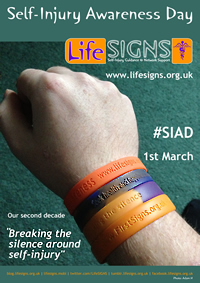
Supporting Self-Injury Awareness Day 2013

siad-wristbands-200Self-harm happens in secret. It’s a coping mechanism to relieve emotional pain and stress.  A person who self harms may cut, bruise, pick, bite or stab. They may abuse alcohol or drugs, or by inhaling or swallowing substances that are toxic to the body.

Self-harm brings a physical sensation that temporarily relieves the numbness a person feels because of their trauma, their depression, their low self-esteem, or perhaps because of the pressure they feel to be perfect. There can be any number of reasons why people self harm.

People from all walks of life can find themselves self-harming and sometimes don’t know how to stop. That’s why I’m supporting Self-Injury Awareness Day 2013 (SIAD). Because there is a way out and there is a way to stop. Self-harm doesn’t have to stay in the shadows. It’s a cry for help. And SIAD is helping to break that silence.

Check out LifeSigns for more information and ways to get help that don’t involve hurting yourself.